Skirlie Scottish Oatmeal Stuffing
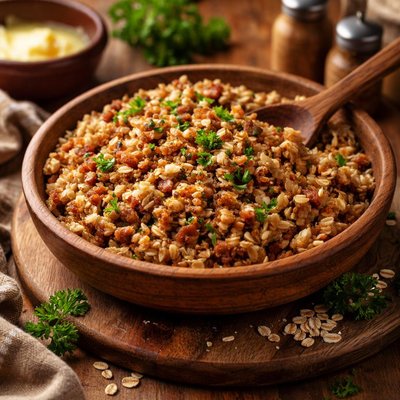
Discover the rustic charm of traditional Scottish cuisine with Skirlie, a hearty oatmeal stuffing that’s as versatile as it is flavorful. Made with nutty steel-cut oats, buttery sautéed onions, and a hint of seasoning, this simple yet satisfying dish is a testament to Scottish comfort food at its finest. Whether you prepare it with unsalted butter or opt for the authentic touch of beef suet, Skirlie delivers a warming, nutty aroma and a rich texture that pairs beautifully with roasted poultry, stuffed vegetables, or even as a standalone side. Ready in just 30 minutes, this classic recipe is perfect for adding a wholesome, old-world twist to your meal. With optional chicken or vegetable stock for added moisture, Skirlie is adaptable to suit your preferences while retaining its timeless appeal.

Smart Nutrition Tracking with SnapCalorie

Explore More
Recipe Information
Ingredients
- 150 g Steel-cut oats
- 50 g Unsalted butter (or beef suet for a traditional version)
- 1 medium Yellow onion, finely chopped
- 1 tsp Salt
- 0.5 tsp Ground black pepper
- 120 ml Chicken or vegetable stock (optional)
Instructions
Melt the butter (or suet) in a large skillet over medium heat.
Add the finely chopped onion to the skillet and cook, stirring frequently, for 5-7 minutes until the onions are soft and translucent.
Stir in the steel-cut oats, ensuring the oats are well-coated in the butter and combined with the onions.
Season with salt and pepper, and continue cooking over medium heat for 10-12 minutes, stirring occasionally. If the mixture becomes too dry, gradually add the chicken or vegetable stock a tablespoon at a time to keep it moist.
Once the oats are tender and have a slightly nutty aroma, remove the skillet from the heat.
Serve warm as a side dish or stuffing for poultry or vegetables. Enjoy!
Nutrition Facts
Calories |
244 | ||
|---|---|---|---|
% Daily Value* |
|||
| Total Fat | 12.6 g | 16% | |
| Saturated Fat | 6.9 g | 34% | |
| Polyunsaturated Fat | 0.0 g | ||
| Cholesterol | 27 mg | 9% | |
| Sodium | 576 mg | 25% | |
| Total Carbohydrate | 28.2 g | 10% | |
| Dietary Fiber | 4.4 g | 16% | |
| Total Sugars | 1.2 g | ||
| Protein | 5.3 g | 11% | |
| Vitamin D | 0.2 mcg | 1% | |
| Calcium | 32 mg | 2% | |
| Iron | 1.5 mg | 9% | |
| Potassium | 195 mg | 4% | |
*The % Daily Value tells you how much a nutrient in a serving of food contributes to a daily diet. 2,000 calories a day is used for general nutrition advice.


