Simple Fruit Fly Trap
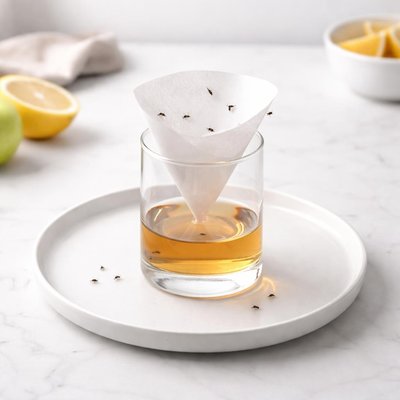
Say goodbye to pesky fruit flies with this quick and ingenious DIY solution: the Simple Fruit Fly Trap. With just a few everyday ingredients like apple cider vinegar, dish soap, and optional ripe fruit, this natural trap effectively lures and eliminates fruit flies in no time. Designed to take only five minutes to prepare, this eco-friendly remedy uses plastic wrap and a rubber band to create a secure trapping mechanism, complete with small holes that attract flies while preventing their escape. Perfect for placement near fruit bowls or trash cans, this homemade fruit fly trap is an effortless and affordable way to tackle infestations. Optimize your kitchen environment with this reliable, non-toxic pest control technique!

Smart Nutrition Tracking with SnapCalorie




Recipe Information
Ingredients
- 0.25 cup Apple cider vinegar
- 2 drops Dish soap
- 1 small piece Ripe fruit (optional)
- 1 piece Plastic wrap
- 1 Rubber band
- 1 Small bowl or jar
Instructions
Pour 0.25 cup of apple cider vinegar into a small bowl or jar.
Add two drops of dish soap to the vinegar. This will break the surface tension so the fruit flies can't escape.
Optionally, place a small piece of ripe fruit in the vinegar to further attract fruit flies.
Cover the bowl or jar tightly with a piece of plastic wrap.
Using a rubber band, secure the plastic wrap tightly around the opening of the bowl or jar so there are no gaps.
Poke 3-5 small holes in the plastic wrap using a toothpick or fork. The holes should be large enough for fruit flies to enter but small enough to prevent them from easily escaping.
Place the trap in an area where fruit flies are most active, such as near a fruit bowl or trash can.
Check the trap daily and replace the mixture as needed until the fruit fly problem is resolved.
Nutrition Facts
Calories |
52 | ||
|---|---|---|---|
% Daily Value* |
|||
| Total Fat | 0.0 g | 0% | |
| Saturated Fat | 0.0 g | 0% | |
| Polyunsaturated Fat | 0.0 g | ||
| Cholesterol | 0 mg | 0% | |
| Sodium | 4 mg | 0% | |
| Total Carbohydrate | 10.5 g | 4% | |
| Dietary Fiber | 1.3 g | 5% | |
| Total Sugars | 7.4 g | ||
| Protein | 0.3 g | 1% | |
| Vitamin D | 0.0 mcg | 0% | |
| Calcium | 9 mg | 1% | |
| Iron | 0.0 mg | 0% | |
| Potassium | 144 mg | 3% | |
*The % Daily Value tells you how much a nutrient in a serving of food contributes to a daily diet. 2,000 calories a day is used for general nutrition advice.


