Sesame Shirataki Noodles
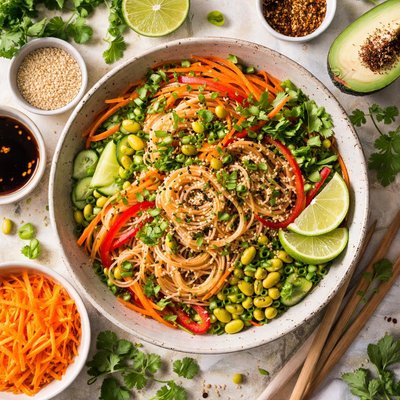
Light, flavorful, and irresistibly healthy, Sesame Shirataki Noodles are a low-carb, gluten-free delight that's perfect for a quick and satisfying meal. Made with shirataki noodles—a keto-friendly alternative rich in fiber—this dish is coated in a savory sesame-soy sauce infused with garlic, ginger, and a hint of hoisin for a touch of sweetness. Topped with crisp scallions and nutty toasted sesame seeds, these noodles come together in just 15 minutes, making them a go-to recipe for busy weeknights. Whether you're seeking a guilt-free dinner or a flavorful side dish, this Asian-inspired creation is sure to impress.

Smart Nutrition Tracking with SnapCalorie


Recipe Information
Ingredients
- 2 packages (7 oz each) Shirataki noodles
- 1 tablespoon Sesame oil
- 2 tablespoons Soy sauce (low-sodium, if preferred)
- 1 tablespoon Rice vinegar
- 1 tablespoon Hoisin sauce
- 2 Garlic cloves, minced
- 1 teaspoon Ginger, grated
- 0.25 teaspoon Red pepper flakes (optional)
- 2 Scallions, thinly sliced
- 1 tablespoon Toasted sesame seeds
- 1 teaspoon Vegetable oil
Instructions
Drain the shirataki noodles from their packaging and rinse thoroughly under running water for 2-3 minutes to remove their natural odor.
Bring a small pot of water to a boil. Add the rinsed noodles and cook for 2 minutes. Drain well and pat the noodles dry with paper towels.
Heat the teaspoon of vegetable oil in a large non-stick skillet over medium heat. Add the noodles and dry stir-fry for 2-3 minutes to remove excess moisture. Set aside.
In a small mixing bowl, whisk together sesame oil, soy sauce, rice vinegar, hoisin sauce, minced garlic, grated ginger, and red pepper flakes (if using).
Add the prepared sauce to the skillet with the noodles. Toss the noodles in the sauce until well coated and heated through, about 1-2 minutes.
Remove the skillet from heat. Garnish the noodles with sliced scallions and toasted sesame seeds.
Serve immediately and enjoy your Sesame Shirataki Noodles!
Nutrition Facts
Calories |
168 | ||
|---|---|---|---|
% Daily Value* |
|||
| Total Fat | 11.8 g | 15% | |
| Saturated Fat | 1.6 g | 8% | |
| Polyunsaturated Fat | 4.5 g | ||
| Cholesterol | 0 mg | 0% | |
| Sodium | 634 mg | 28% | |
| Total Carbohydrate | 14.7 g | 5% | |
| Dietary Fiber | 5.0 g | 18% | |
| Total Sugars | 2.9 g | ||
| Protein | 2.6 g | 5% | |
| Vitamin D | 0.0 mcg | 0% | |
| Calcium | 84 mg | 6% | |
| Iron | 1.3 mg | 7% | |
| Potassium | 218 mg | 5% | |
*The % Daily Value tells you how much a nutrient in a serving of food contributes to a daily diet. 2,000 calories a day is used for general nutrition advice.


