
Sauerkraut
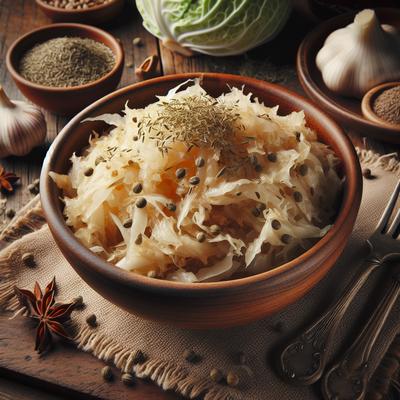
Transform your pantry with this homemade sauerkraut recipe—a simple, probiotic-rich delight that’s packed with flavor and health benefits. Made with just three basic ingredients—fresh green cabbage, kosher salt, and optional caraway seeds for a fragrant twist—this recipe is a celebration of natural fermentation. With only 30 minutes of hands-on prep time, followed by a slow and magical transformation over 1–4 weeks, you’ll be rewarded with crisp, tangy sauerkraut bursting with gut-friendly goodness. Perfect as a side dish, sandwich topping, or a tangy addition to your favorite meals, this DIY sauerkraut is the ultimate fridge staple that keeps fresh for months. Try it at home and taste the difference of authentic, homemade fermentation!

Log this recipe in SnapCalorie

Recipe Information
Ingredients
- 1 large head (approximately 2 to 3 pounds) Green cabbage
- 1.5 tablespoons Kosher salt
- 1 teaspoon Caraway seeds (optional)
Instructions
Remove the tough outer leaves of the cabbage, then rinse the cabbage under cold running water to clean it.
Using a sharp knife or a mandoline, cut the cabbage into thin shreds. Remove and discard the core.
Transfer the shredded cabbage to a large mixing bowl. Sprinkle the kosher salt evenly over the cabbage.
Massage the salt into the cabbage with clean hands for about 5–10 minutes, or until the cabbage begins to soften and release its natural juices.
If desired, add caraway seeds for flavor and mix them evenly throughout the cabbage.
Pack the cabbage tightly into a clean, wide-mouth quart-sized mason jar or fermenting crock. Use a tamper or the back of a spoon to press the cabbage down firmly until the liquid (brine) rises to cover the cabbage completely.
Place a small weight or a smaller jar filled with water inside the mason jar to keep the cabbage submerged under the brine. If using a fermenting crock, use the provided weights.
Loosely cover the jar with a lid or clean cheesecloth secured with a rubber band to allow gases to escape while keeping contaminants out.
Place the jar or crock in a cool, dark spot (60–75°F or 16–24°C) for 1–4 weeks, depending on your desired tanginess. Check daily to ensure the cabbage remains submerged under the brine.
Taste the sauerkraut starting after week one. When it reaches your preferred flavor and texture, transfer it to the refrigerator, where it will keep for up to 6 months.
Nutrition Facts
Calories |
290 | ||
|---|---|---|---|
% Daily Value* |
|||
| Total Fat | 1.4 g | 2% | |
| Saturated Fat | 0.4 g | 2% | |
| Polyunsaturated Fat | 0.0 g | ||
| Cholesterol | 0 mg | 0% | |
| Sodium | 2859 mg | 124% | |
| Total Carbohydrate | 66.7 g | 24% | |
| Dietary Fiber | 29.1 g | 104% | |
| Total Sugars | 36.3 g | ||
| Protein | 15.1 g | 30% | |
| Vitamin D | 0.0 mcg | 0% | |
| Calcium | 467 mg | 36% | |
| Iron | 5.6 mg | 31% | |
| Potassium | 1953 mg | 42% | |
*The % Daily Value tells you how much a nutrient in a serving of food contributes to a daily diet. 2,000 calories a day is used for general nutrition advice.


