
Saucy Asian Bok Choy
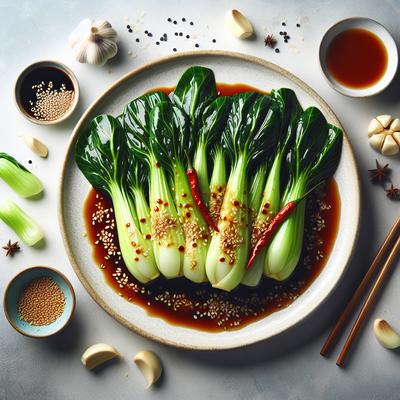
Elevate your vegetable side dish game with Saucy Asian Bok Choy, a quick and flavorful recipe that’s as nutritious as it is delicious. Tender baby bok choy is stir-fried with fragrant garlic, zesty ginger, and a hint of red pepper flakes for subtle heat, then coated in a savory soy and oyster sauce glaze that thickens to perfection. A touch of sesame oil adds a nutty depth, while a sprinkle of sesame seeds lends a delightful crunch. Ready in just 20 minutes, this dish is a perfect accompaniment to your favorite Asian-inspired meals or an easy, healthy weeknight side. Bursting with flavor, color, and texture, Saucy Asian Bok Choy will have everyone asking for seconds!

Log this recipe in SnapCalorie

Recipe Information
Ingredients
- 4 heads baby bok choy
- 3 tablespoons soy sauce
- 1 tablespoon oyster sauce
- 1 teaspoon sesame oil
- 4 cloves garlic
- 1 teaspoon ginger
- 2 tablespoons vegetable oil
- 1 teaspoon cornstarch
- 3 tablespoons water
- 1 tablespoon sesame seeds
- 0.5 teaspoon red pepper flakes
Instructions
Trim the baby bok choy by cutting off the ends and separating the leaves. Rinse thoroughly under cool water to remove any dirt.
Mince the garlic cloves and finely grate the ginger.
In a small bowl, whisk together soy sauce, oyster sauce, sesame oil, cornstarch, and water. Set aside.
Heat the vegetable oil in a large skillet or wok over medium-high heat.
Add the minced garlic, grated ginger, and red pepper flakes. Stir-fry for 30 seconds, or until fragrant.
Add the bok choy leaves to the skillet, stirring frequently, and cook for 3-4 minutes until the leaves are tender and the stems are slightly softened.
Pour the sauce mixture into the skillet, stirring to evenly coat the bok choy. Allow the sauce to thicken for about 1-2 minutes.
Remove from heat and transfer the bok choy to a serving dish.
Sprinkle sesame seeds over the top before serving for added flavor and presentation.
Nutrition Facts
Calories |
571 | ||
|---|---|---|---|
% Daily Value* |
|||
| Total Fat | 47.2 g | 61% | |
| Saturated Fat | 6.5 g | 32% | |
| Polyunsaturated Fat | 24.8 g | ||
| Cholesterol | 0 mg | 0% | |
| Sodium | 2692 mg | 117% | |
| Total Carbohydrate | 29.8 g | 11% | |
| Dietary Fiber | 10.1 g | 36% | |
| Total Sugars | 10.1 g | ||
| Protein | 19.3 g | 39% | |
| Vitamin D | 0.0 mcg | 0% | |
| Calcium | 891 mg | 69% | |
| Iron | 7.9 mg | 44% | |
| Potassium | 2303 mg | 49% | |
*The % Daily Value tells you how much a nutrient in a serving of food contributes to a daily diet. 2,000 calories a day is used for general nutrition advice.


