Russian Dill Pickles
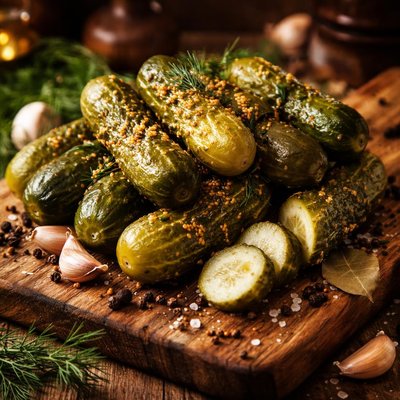
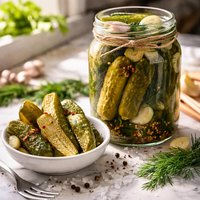
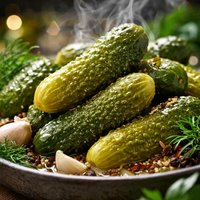
Discover the bold, tangy flavors of traditional Russian Dill Pickles, a time-honored recipe that brings fermentation artistry into your kitchen. Using crisp pickling cucumbers, aromatic fresh dill, and a blend of garlic, bay leaves, black peppercorns, and mustard seeds, this homemade pickle recipe delivers an irresistible crunch and depth of flavor that store-bought versions simply can’t match. The brine, made with coarse non-iodized salt and water, creates the ideal environment for natural fermentation, unlocking the signature sourness and probiotic benefits that make these pickles a beloved staple. Perfect as a snack, appetizer, or zesty side dish, these pickles require minimal hands-on time and just a few days of fermenting at room temperature. Treat your taste buds to the authentic taste of Russian cuisine with this easy, preservative-free recipe!

Smart Nutrition Tracking with SnapCalorie

Explore More
Recipe Information
Ingredients
- 1 kilogram Small cucumbers (pickling cucumbers)
- 1 bunch Fresh dill
- 6 pieces Garlic cloves
- 3 pieces Bay leaves
- 1 teaspoon Black peppercorns
- 1 teaspoon Mustard seeds
- 3 tablespoons Coarse salt (non-iodized)
- 1 liter Water
Instructions
Wash the cucumbers thoroughly. If the cucumbers are larger in size, you may slice them lengthwise into halves or quarters.
Sterilize the jars you will be using to store the pickles by boiling them in water for a few minutes or using a dishwasher with a sterilization function. Let the jars air dry completely.
Peel the garlic cloves and lightly crush them with the flat side of a knife.
In a large pot, prepare the brine by combining 1 liter of water with 3 tablespoons of coarse salt. Heat the mixture until the salt fully dissolves, then remove from heat and let it cool to room temperature.
Layer the bottom of the sterilized jars with fresh dill sprigs, a few garlic cloves, bay leaves, black peppercorns, and mustard seeds.
Tightly pack the cucumbers into the jars, placing some additional dill and garlic cloves in between layers to evenly distribute the flavor.
Once the brine has cooled, pour it into the jars so that it completely covers the cucumbers. Leave about 1–2 cm of space at the top of each jar.
Seal the jars with sterilized lids and store them at room temperature for 3–5 days to allow fermentation to begin. You may want to place the jars on a tray to catch any liquid that could leak during the fermentation process.
Check the pickles daily, ensuring that they remain submerged in the brine. If necessary, press them down with a clean weight or add more brine.
After 3–5 days, taste the pickles. If they are tangy and flavorful to your liking, transfer the jars to the refrigerator to slow down the fermentation process. They can last for several weeks when refrigerated.
Serve the pickles chilled as a snack, appetizer, or side dish. Enjoy!
Nutrition Facts
Calories |
46 | ||
|---|---|---|---|
% Daily Value* |
|||
| Total Fat | 1.1 g | 1% | |
| Saturated Fat | 0.0 g | 0% | |
| Polyunsaturated Fat | 0.0 g | ||
| Cholesterol | 0 mg | 0% | |
| Sodium | 4385 mg | 191% | |
| Total Carbohydrate | 8.5 g | 3% | |
| Dietary Fiber | 2.1 g | 8% | |
| Total Sugars | 2.7 g | ||
| Protein | 2.7 g | 5% | |
| Vitamin D | 0.0 mcg | 0% | |
| Calcium | 107 mg | 8% | |
| Iron | 1.6 mg | 9% | |
| Potassium | 491 mg | 10% | |
*The % Daily Value tells you how much a nutrient in a serving of food contributes to a daily diet. 2,000 calories a day is used for general nutrition advice.


