Roasted Balsamic Beets
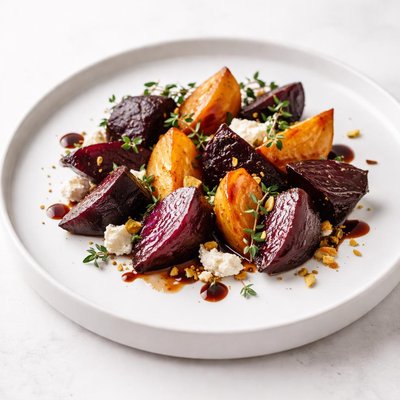
Elevate your side dish game with these irresistibly tender Roasted Balsamic Beets! This easy-to-make recipe transforms earthy beets into a caramelized delight with just a few pantry staples like olive oil, balsamic vinegar, and a touch of honey or maple syrup for natural sweetness. Perfectly roasted to bring out their rich, sweet flavor, these beets are tossed in a tangy balsamic glaze and garnished with fresh thyme for a hint of herbal brightness. Whether served warm alongside your favorite protein or sprinkled over a hearty salad, this dish is a vibrant, nutrient-packed addition to any meal. Plus, with minimal prep and just 45 minutes in the oven, it's a hassle-free way to add elegance to your table.

Smart Nutrition Tracking with SnapCalorie

Explore More

Recipe Information
Ingredients
- 4 medium (approx. 2 pounds) Beets
- 2 tablespoons Olive oil
- 2 tablespoons Balsamic vinegar
- 1 tablespoon Honey (or maple syrup for a vegan version)
- 0.5 teaspoon Salt
- 0.25 teaspoon Black pepper
- 2 teaspoons Fresh thyme (optional, for garnish)
Instructions
Preheat your oven to 400°F (200°C).
Wash and trim the beets, removing any leaves or stems. Peel the beets using a vegetable peeler.
Cut the beets into 1-inch cubes, ensuring uniform size for even roasting.
In a large mixing bowl, combine olive oil, balsamic vinegar, honey (or maple syrup), salt, and black pepper. Whisk until well mixed.
Add the cubed beets to the bowl and toss until all pieces are evenly coated with the mixture.
Spread the beets in a single layer on a baking sheet lined with parchment paper or aluminum foil for easier cleanup.
Roast in the preheated oven for 40-45 minutes, stirring halfway through, until the beets are tender and slightly caramelized.
Remove the beets from the oven and transfer them to a serving dish. Garnish with fresh thyme, if desired.
Serve warm as a side dish or salad topping. Enjoy!
Nutrition Facts
Calories |
492 | ||
|---|---|---|---|
% Daily Value* |
|||
| Total Fat | 8.3 g | 11% | |
| Saturated Fat | 0.9 g | 5% | |
| Polyunsaturated Fat | 0.9 g | ||
| Cholesterol | 0 mg | 0% | |
| Sodium | 2078 mg | 90% | |
| Total Carbohydrate | 96.5 g | 35% | |
| Dietary Fiber | 26.9 g | 96% | |
| Total Sugars | 69.6 g | ||
| Protein | 15.8 g | 32% | |
| Vitamin D | 0.0 mcg | 0% | |
| Calcium | 164 mg | 13% | |
| Iron | 7.4 mg | 41% | |
| Potassium | 3083 mg | 66% | |
*The % Daily Value tells you how much a nutrient in a serving of food contributes to a daily diet. 2,000 calories a day is used for general nutrition advice.


