
Refrigerator Fire and Ice Pickles
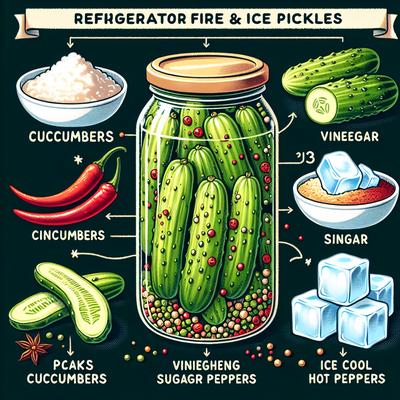
Turn up the flavor dial with these bold and irresistible Refrigerator Fire and Ice Pickles! This no-cook recipe combines the crunch of dill pickle slices with a mouthwatering blend of sweet sugar, tangy vinegar, and fiery crushed red pepper flakes, balanced perfectly with subtle notes of garlic and pickling spice. Ready in just 15 minutes of prep and a day of chilling, these spicy-sweet pickles are the ultimate upgrade to your snacking game. Perfect as a zesty standalone treat or the ideal condiment to transform burgers, sandwiches, and charcuterie boards, these pickles are a versatile kitchen staple. Try them after 2-3 days of refrigeration for the most intense flavor burst!

Log this recipe in SnapCalorie

Recipe Information
Ingredients
- 32 ounces Dill pickle slices
- 2 cups Sugar
- 1 cup White vinegar
- 2 teaspoons Crushed red pepper flakes
- 3 Garlic cloves, thinly sliced
- 1 tablespoon Pickling spice
Instructions
Drain the pickle slices thoroughly, reserving about 1/4 cup of the brine, and discard the remaining brine.
In a large mixing bowl, combine the sugar, white vinegar, and reserved brine. Stir until the sugar is mostly dissolved to create a sweet and tangy liquid base.
Add the crushed red pepper flakes, sliced garlic, and pickling spice to the bowl. Mix well to distribute the spices evenly.
Layer the drained pickle slices into a clean quart-sized jar or any airtight container.
Pour the prepared liquid and spice mixture over the pickles, ensuring all slices are submerged.
Seal the container tightly and refrigerate for at least 24 hours to allow the flavors to meld. For best results, let the pickles sit for 2-3 days before enjoying.
Serve chilled as a spicy and sweet snack, or use them to elevate sandwiches, burgers, or charcuterie boards.
Nutrition Facts
Calories |
1812 | ||
|---|---|---|---|
% Daily Value* |
|||
| Total Fat | 5.3 g | 7% | |
| Saturated Fat | 1.0 g | 5% | |
| Polyunsaturated Fat | 0.0 g | ||
| Cholesterol | 0 mg | 0% | |
| Sodium | 10516 mg | 457% | |
| Total Carbohydrate | 432.2 g | 157% | |
| Dietary Fiber | 12.4 g | 44% | |
| Total Sugars | 412.7 g | ||
| Protein | 7.9 g | 16% | |
| Vitamin D | 0.0 mcg | 0% | |
| Calcium | 458 mg | 35% | |
| Iron | 11.9 mg | 66% | |
| Potassium | 1045 mg | 22% | |
*The % Daily Value tells you how much a nutrient in a serving of food contributes to a daily diet. 2,000 calories a day is used for general nutrition advice.


