
Red and Yellow Heirloom Tomato Platter with Balsamic Vinaigrette
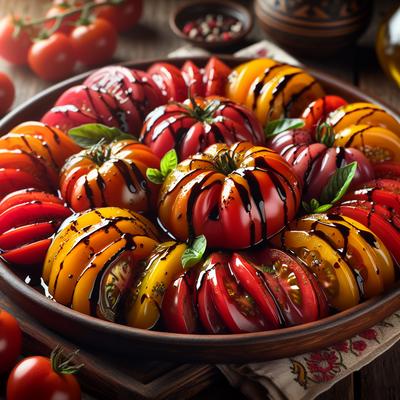
Bright, bold, and brimming with garden-fresh flavors, this Red and Yellow Heirloom Tomato Platter with Balsamic Vinaigrette is summer on a plate. Featuring juicy heirloom tomatoes in vibrant shades of red and yellow, this dish is as stunning as it is delicious. Topped with fragrant torn basil leaves and drizzled with a tangy-sweet balsamic vinaigrette made with honey, garlic, and extra virgin olive oil, every bite is a harmonious balance of freshness and depth. Ready in just 15 minutes and requiring no cooking, this easy tomato salad is the perfect side dish or appetizer for warm-weather gatherings. Serve it as a centerpiece at a barbecue or pair it with crusty bread to make a light, elegant starter.

Log this recipe in SnapCalorie

Recipe Information
Ingredients
- 3 large Red heirloom tomatoes
- 3 large Yellow heirloom tomatoes
- 10 leaves Fresh basil leaves
- 3 tablespoons Extra virgin olive oil
- 2 tablespoons Balsamic vinegar
- 1 teaspoon Honey
- 1 clove Garlic
- 0.25 teaspoons Salt
- 0.25 teaspoons Black pepper
Instructions
Wash and pat dry the red and yellow heirloom tomatoes. Slice each tomato into 1/4-inch thick rounds and arrange them alternately on a large serving platter for a visually appealing pattern.
Rinse the fresh basil leaves and pat them dry. Tear the leaves gently with your hands and scatter them evenly over the tomato slices.
In a small bowl, whisk together the extra virgin olive oil, balsamic vinegar, honey, salt, and black pepper.
Grate or finely mince the garlic clove and add it to the vinaigrette mixture. Whisk again to combine thoroughly.
Drizzle the balsamic vinaigrette evenly over the tomatoes and basil on the platter.
Serve immediately as a refreshing side dish or light appetizer. Optionally, garnish with additional fresh basil leaves for extra color and aroma.
Nutrition Facts
Calories |
606 | ||
|---|---|---|---|
% Daily Value* |
|||
| Total Fat | 44.2 g | 57% | |
| Saturated Fat | 6.0 g | 30% | |
| Polyunsaturated Fat | 0.0 g | ||
| Cholesterol | 0 mg | 0% | |
| Sodium | 652 mg | 28% | |
| Total Carbohydrate | 53.5 g | 19% | |
| Dietary Fiber | 13.0 g | 46% | |
| Total Sugars | 37.9 g | ||
| Protein | 10.1 g | 20% | |
| Vitamin D | 0.0 mcg | 0% | |
| Calcium | 135 mg | 10% | |
| Iron | 4.0 mg | 22% | |
| Potassium | 2603 mg | 55% | |
*The % Daily Value tells you how much a nutrient in a serving of food contributes to a daily diet. 2,000 calories a day is used for general nutrition advice.


