Radish Kimchi
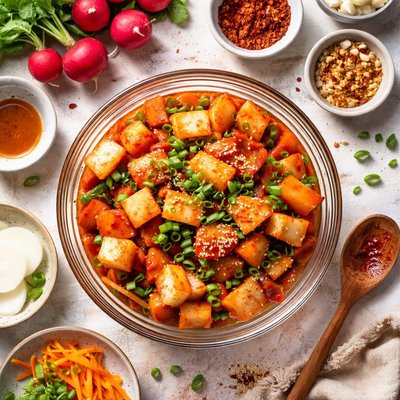
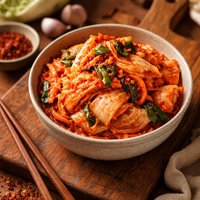
Discover the bold and tangy flavors of **Radish Kimchi**, a vibrant Korean side dish crafted from crunchy cubes of Korean white radish (mu), brined and coated in a spicy, aromatic paste made with gochugaru, garlic, ginger, fish sauce, and a touch of sugar for balance. This quick-to-prepare, no-cook recipe showcases traditional fermentation techniques, giving the radish a satisfyingly sharp, umami-rich taste as it develops over time. Perfect for adding zest to rice dishes, barbeque spreads, or hearty stews, this easy homemade kimchi boasts authentic Korean flavors with minimal effort. Ready in just 30 minutes of prep, it’s a flavorful addition to any meal and a fantastic way to embrace the art of small-batch fermentation!

Smart Nutrition Tracking with SnapCalorie

Recipe Information
Ingredients
- 1 large (about 2 pounds) Korean white radish (mu)
- 2 tablespoons Coarse sea salt
- 2 cups Water
- 4 tablespoons Korean red pepper powder (gochugaru)
- 4 Garlic cloves, minced
- 1 teaspoon Ginger, grated
- 3 tablespoons Fish sauce
- 1 teaspoon Sugar
- 3 Spring onions, chopped
Instructions
Start by cleaning the radish thoroughly and peeling it. Slice it into 1-inch cubes. The uniform size will ensure even fermentation and flavor absorption.
In a large mixing bowl, dissolve 2 tablespoons of coarse sea salt in 2 cups of water to create a brine. Submerge the radish pieces in the brine and let them soak for about 30 minutes. This process softens the radish and begins the pickling process.
While the radish is soaking, prepare the kimchi paste. In a separate bowl, combine the gochugaru, minced garlic, grated ginger, fish sauce, and sugar, mixing it thoroughly until it forms a consistent paste.
After 30 minutes of soaking, drain the radish and rinse them in fresh water to remove excess salt.
Add the drained radish cubes to the bowl with the kimchi paste. Add the chopped spring onions. Mix everything together with your hands, ensuring all the radish pieces are evenly coated. It's advisable to wear kitchen gloves to protect your hands from the chili spice.
Transfer the coated radish mixture to a clean, airtight container or jar. Pack it down tightly to minimize air gaps, which could affect fermentation.
Leave the radish kimchi at room temperature for 1-2 days to ferment. Depending on the ambient temperature, the fermentation time might vary. Taste after 24 hours; if it has developed the desired tanginess, you can refrigerate it. Otherwise, let it ferment a day longer.
Once fermented to your preference, store the radish kimchi in the refrigerator. It will continue to ferment slowly and can last for several weeks, developing more complex flavors over time.
Nutrition Facts
Calories |
45 | ||
|---|---|---|---|
% Daily Value* |
|||
| Total Fat | 0.6 g | 1% | |
| Saturated Fat | 0.0 g | 0% | |
| Polyunsaturated Fat | 0.0 g | ||
| Cholesterol | 0 mg | 0% | |
| Sodium | 1957 mg | 85% | |
| Total Carbohydrate | 9.4 g | 3% | |
| Dietary Fiber | 3.6 g | 13% | |
| Total Sugars | 5.0 g | ||
| Protein | 1.9 g | 4% | |
| Vitamin D | 0.0 mcg | 0% | |
| Calcium | 61 mg | 5% | |
| Iron | 1.0 mg | 6% | |
| Potassium | 435 mg | 9% | |
*The % Daily Value tells you how much a nutrient in a serving of food contributes to a daily diet. 2,000 calories a day is used for general nutrition advice.


