Pork with Pear Compote
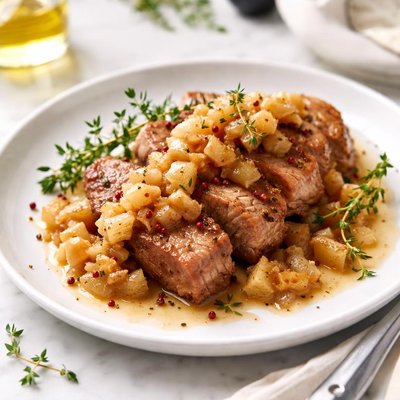
Elevate your dinner table with this luscious Pork with Pear Compote recipe—a perfect harmony of savory and sweet flavors. Succulent, golden-seared boneless pork chops shine alongside a silky pear compote made with ripe, caramelized pears, a drizzle of honey, and a hint of cinnamon and lemon juice for a bright, warm finish. This easy yet elegant dish comes together in just 35 minutes, making it ideal for weeknight meals or a special occasion. Serve it with a garnish of fresh thyme for a touch of elegance and a burst of herby freshness. With simple ingredients and a gourmet twist, this recipe is sure to impress!

Smart Nutrition Tracking with SnapCalorie




Recipe Information
Ingredients
- 4 pieces Boneless pork chops
- 1 teaspoon Salt
- 1 teaspoon Black pepper
- 2 tablespoons Olive oil
- 1 tablespoon Unsalted butter
- 3 medium Ripe pears
- 2 tablespoons Honey
- 1 tablespoon Fresh lemon juice
- 0.25 teaspoon Ground cinnamon
- 2 tablespoons Water
- 2 sprigs Fresh thyme (optional, for garnish)
Instructions
Pat the pork chops dry with paper towels and season both sides with salt and black pepper.
Heat a large skillet over medium-high heat and add the olive oil.
Once the oil is hot, add the pork chops to the skillet and cook for 4-5 minutes per side, or until golden brown and cooked through. Remove the pork chops from the skillet and set aside to rest.
In the same skillet, reduce the heat to medium and add the butter.
Peel, core, and dice the pears into small cubes.
Add the pears to the skillet and cook for 3-4 minutes, stirring occasionally, until softened.
Stir in the honey, lemon juice, ground cinnamon, and water. Cook for an additional 5-7 minutes, allowing the mixture to thicken into a compote.
Remove the pear compote from heat and adjust sweetness with additional honey if needed.
Serve the pork chops topped with a generous spoonful of the pear compote.
Optional: Garnish with fresh thyme sprigs for an elegant touch.
Nutrition Facts
Calories |
427 | ||
|---|---|---|---|
% Daily Value* |
|||
| Total Fat | 23.8 g | 31% | |
| Saturated Fat | 8.0 g | 40% | |
| Polyunsaturated Fat | 0.0 g | ||
| Cholesterol | 87 mg | 29% | |
| Sodium | 547 mg | 24% | |
| Total Carbohydrate | 29.7 g | 11% | |
| Dietary Fiber | 4.8 g | 17% | |
| Total Sugars | 21.4 g | ||
| Protein | 26.0 g | 52% | |
| Vitamin D | 0.2 mcg | 1% | |
| Calcium | 34 mg | 3% | |
| Iron | 1.3 mg | 7% | |
| Potassium | 599 mg | 13% | |
*The % Daily Value tells you how much a nutrient in a serving of food contributes to a daily diet. 2,000 calories a day is used for general nutrition advice.


