Pomegranate Molasses
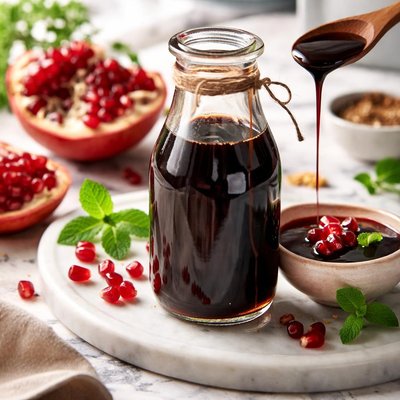
Elevate your cooking game with homemade pomegranate molasses—a tangy, sweet, and deeply flavorful syrup made with just three simple ingredients: pomegranate juice, granulated sugar, and fresh lemon juice. This versatile condiment is a must-have for adding a rich burst of flavor to savory dishes, salad dressings, or desserts. With only 5 minutes of prep time, the recipe transforms over a slow simmer, reducing the juice into a thick, glossy molasses that boasts a perfect balance of sweet and tart. The magic lies in its simplicity and the remarkable depth of flavor it brings to your kitchen. Plus, it keeps for up to six months in the refrigerator, making it an essential pantry staple for home chefs who love experimenting with bold, Middle Eastern-inspired flavors.

Smart Nutrition Tracking with SnapCalorie



Recipe Information
Ingredients
- 4 cups Pomegranate juice
- 0.5 cups Granulated sugar
- 2 tablespoons Fresh lemon juice
Instructions
1. In a medium-sized heavy-bottomed saucepan, combine the pomegranate juice, granulated sugar, and fresh lemon juice.
2. Place the saucepan over medium-high heat and stir until the sugar is completely dissolved.
3. Once the mixture begins to simmer, reduce the heat to medium-low and allow it to cook uncovered, stirring occasionally.
4. Continue simmering for about 60-70 minutes, or until the liquid has reduced to about 1 cup and has a syrupy consistency. The molasses will thicken further as it cools.
5. Remove the saucepan from the heat and let the pomegranate molasses cool completely to room temperature.
6. Pour the cooled pomegranate molasses into a clean, airtight jar or bottle and store it in the refrigerator for up to 6 months.
Nutrition Facts
Calories |
982 | ||
|---|---|---|---|
% Daily Value* |
|||
| Total Fat | 0.0 g | 0% | |
| Saturated Fat | 0.0 g | 0% | |
| Polyunsaturated Fat | 0.0 g | ||
| Cholesterol | 0 mg | 0% | |
| Sodium | 144 mg | 6% | |
| Total Carbohydrate | 246.3 g | 90% | |
| Dietary Fiber | 0.0 g | 0% | |
| Total Sugars | 245.2 g | ||
| Protein | 0.0 g | 0% | |
| Vitamin D | 0.0 mcg | 0% | |
| Calcium | 50 mg | 4% | |
| Iron | 1.1 mg | 6% | |
| Potassium | 799 mg | 17% | |
*The % Daily Value tells you how much a nutrient in a serving of food contributes to a daily diet. 2,000 calories a day is used for general nutrition advice.


