Plain Roasted Artichoke Hearts
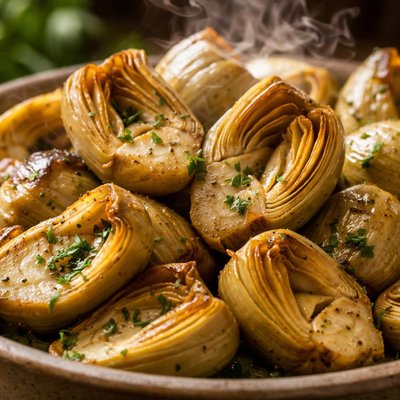
Elevate your vegetable side dish game with these Plain Roasted Artichoke Hearts—a simple yet flavorful recipe that highlights the tender, nutty essence of artichokes. Perfectly seasoned with olive oil, garlic powder, salt, and pepper, these golden-brown beauties roast to crispy-edged perfection in just 25 minutes. Whether you’re using canned or frozen artichoke hearts, this easy recipe requires minimal prep yet delivers maximum flavor. Finish with a drizzle of fresh lemon juice for a tangy touch, and serve them warm as an irresistible snack or a stunning side dish to complement any meal. Healthy, quick, and utterly delicious, this roasted artichoke hearts recipe is sure to become a household favorite!

Smart Nutrition Tracking with SnapCalorie





Recipe Information
Ingredients
- 400 grams Artichoke hearts (canned or frozen, drained and patted dry)
- 2 tablespoons Olive oil
- 0.5 teaspoons Salt
- 0.25 teaspoons Black pepper
- 0.5 teaspoons Garlic powder
- 1 tablespoon Lemon juice (optional, for serving)
Instructions
Preheat your oven to 400°F (200°C) and line a baking sheet with parchment paper or lightly grease it with olive oil.
If using frozen artichoke hearts, thaw them and pat them dry with a paper towel. If using canned, drain and rinse thoroughly, then pat dry.
In a mixing bowl, combine the artichoke hearts with olive oil, salt, black pepper, and garlic powder. Toss gently to coat evenly.
Spread the seasoned artichoke hearts in a single layer on the prepared baking sheet, ensuring they are not overcrowded.
Roast in the preheated oven for 20-25 minutes, flipping halfway through, until the artichoke hearts are golden brown and slightly crispy on the edges.
Remove from the oven and allow them to cool slightly before serving.
Optional: Drizzle with fresh lemon juice before serving for a bright, tangy finish.
Serve warm as a side dish or enjoy as a light snack!
Nutrition Facts
Calories |
122 | ||
|---|---|---|---|
% Daily Value* |
|||
| Total Fat | 6.9 g | 9% | |
| Saturated Fat | 1.0 g | 5% | |
| Polyunsaturated Fat | 0.0 g | ||
| Cholesterol | 0 mg | 0% | |
| Sodium | 553 mg | 24% | |
| Total Carbohydrate | 13.7 g | 5% | |
| Dietary Fiber | 5.5 g | 20% | |
| Total Sugars | 1.1 g | ||
| Protein | 3.6 g | 7% | |
| Vitamin D | 0.0 mcg | 0% | |
| Calcium | 44 mg | 3% | |
| Iron | 1.5 mg | 8% | |
| Potassium | 180 mg | 4% | |
*The % Daily Value tells you how much a nutrient in a serving of food contributes to a daily diet. 2,000 calories a day is used for general nutrition advice.


