Peanut Butter Chocolate Cake for One
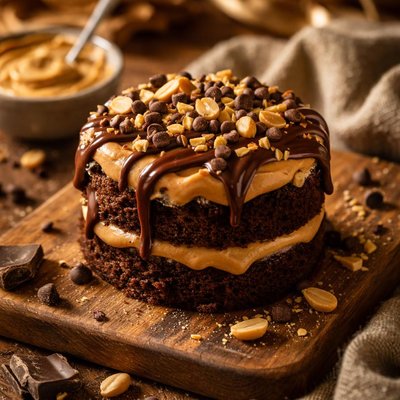
Indulge your sweet tooth with this decadent Peanut Butter Chocolate Cake for One—a quick, single-serving dessert that’s ready in under 10 minutes! Perfectly rich and moist, this microwave mug cake blends deep chocolate flavor with creamy swirls of peanut butter for the ultimate treat. A sprinkle of chocolate chips on top elevates every bite, making it a warm, gooey delight. With simple pantry staples and a hassle-free cooking method, this recipe is ideal for satisfying late-night cravings or creating a personal dessert moment. Whether enjoyed straight from the mug or plated for a touch of elegance, this one-bowl wonder proves that big flavors can come in small—and fast—packages.

Smart Nutrition Tracking with SnapCalorie

Explore More


Recipe Information
Ingredients
- 3 tablespoons All-purpose flour
- 2 tablespoons Granulated sugar
- 1.5 tablespoons Unsweetened cocoa powder
- 0.25 teaspoons Baking powder
- 1 pinch Salt
- 3 tablespoons Milk
- 2 tablespoons Vegetable oil
- 0.25 teaspoons Vanilla extract
- 1.5 tablespoons Peanut butter
- 1 tablespoon Chocolate chips
Instructions
In a microwave-safe mug, combine the flour, sugar, cocoa powder, baking powder, and a pinch of salt. Mix well to ensure all dry ingredients are evenly distributed.
Add the milk, vegetable oil, and vanilla extract to the dry ingredients. Stir thoroughly until a smooth batter forms.
Gently stir in the peanut butter, creating a slight swirl in the batter. Do not overmix to retain some peanut butter pockets.
Sprinkle chocolate chips on top of the batter.
Place the mug in the microwave and cook on high power for 60-90 seconds. Start by microwaving for 60 seconds, checking if the cake is set in the center. If not, microwave in 10-15 second increments until done.
Carefully remove the mug from the microwave (it will be hot). Let the cake cool for 1-2 minutes before serving.
Enjoy the cake straight from the mug or transfer it to a plate for a more elegant presentation.
Nutrition Facts
Calories |
671 | ||
|---|---|---|---|
% Daily Value* |
|||
| Total Fat | 45.2 g | 58% | |
| Saturated Fat | 10.2 g | 51% | |
| Polyunsaturated Fat | 16.9 g | ||
| Cholesterol | 4 mg | 1% | |
| Sodium | 407 mg | 18% | |
| Total Carbohydrate | 64.5 g | 23% | |
| Dietary Fiber | 5.8 g | 21% | |
| Total Sugars | 37.7 g | ||
| Protein | 11.2 g | 22% | |
| Vitamin D | 0.6 mcg | 3% | |
| Calcium | 80 mg | 6% | |
| Iron | 2.4 mg | 13% | |
| Potassium | 372 mg | 8% | |
*The % Daily Value tells you how much a nutrient in a serving of food contributes to a daily diet. 2,000 calories a day is used for general nutrition advice.


