Paleo Spinach Smoothie
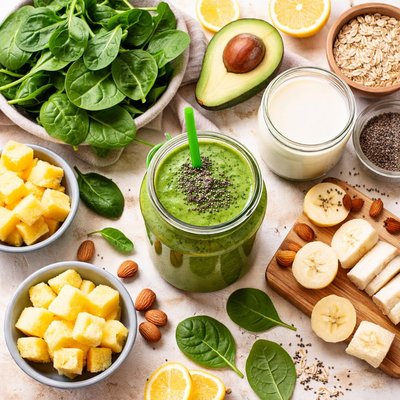
Fuel your day with this vibrant and nutrient-packed Paleo Spinach Smoothie, a perfect blend of refreshing greens and tropical sweetness. Featuring fresh spinach leaves, creamy frozen banana, juicy pineapple chunks, and unsweetened almond milk, this smoothie delivers a burst of vitamins and minerals while staying true to Paleo principles. A hint of unsweetened coconut flakes and chia seeds not only amps up the flavor but also enhances texture and nutritional value. Ready in just 5 minutes, this smoothie is ideal for busy mornings or a post-workout boost. Garnish with extra coconut or chia seeds for a delightful finish, and enjoy a wholesome, dairy-free energizer that’s as delicious as it is healthy!

Smart Nutrition Tracking with SnapCalorie



Recipe Information
Ingredients
- 2 cups fresh spinach leaves
- 1 ripe banana (frozen for creaminess)
- 1 cup unsweetened almond milk
- 1 cup fresh pineapple chunks
- 1 tablespoon unsweetened coconut flakes
- 1 teaspoon chia seeds
- 4 ice cubes
Instructions
1. Rinse the fresh spinach leaves thoroughly under cold water and pat them dry.
2. Peel and slice a ripe banana, or use a pre-frozen banana for added creaminess.
3. Add the spinach leaves, banana, almond milk, pineapple chunks, coconut flakes, chia seeds, and ice cubes to a blender.
4. Blend on high until the mixture is smooth and creamy, usually about 1-2 minutes.
5. Stop the blender and scrape down the sides if necessary, then blend again to ensure all ingredients are fully combined.
6. Taste the smoothie, and if you prefer more sweetness, you can add a small drizzle of honey (optional and only if it aligns with your Paleo preferences).
7. Pour the smoothie into a glass and garnish with a sprinkle of coconut flakes or chia seeds, if desired.
8. Serve immediately and enjoy your Paleo Spinach Smoothie!
Nutrition Facts
Calories |
331 | ||
|---|---|---|---|
% Daily Value* |
|||
| Total Fat | 9.1 g | 12% | |
| Saturated Fat | 4.5 g | 23% | |
| Polyunsaturated Fat | 0.0 g | ||
| Cholesterol | 0 mg | 0% | |
| Sodium | 209 mg | 9% | |
| Total Carbohydrate | 63.6 g | 23% | |
| Dietary Fiber | 11.0 g | 39% | |
| Total Sugars | 38.3 g | ||
| Protein | 5.8 g | 12% | |
| Vitamin D | 2.5 mcg | 12% | |
| Calcium | 553 mg | 43% | |
| Iron | 2.6 mg | 14% | |
| Potassium | 998 mg | 21% | |
*The % Daily Value tells you how much a nutrient in a serving of food contributes to a daily diet. 2,000 calories a day is used for general nutrition advice.


