Paleo Pistachio Crusted Salmon
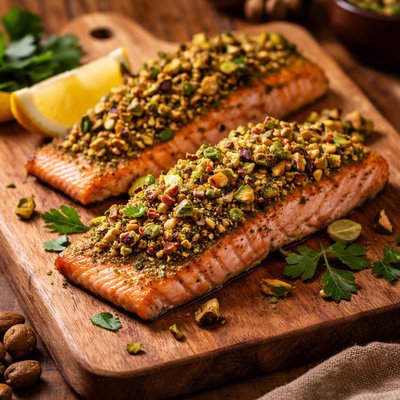
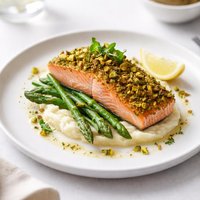
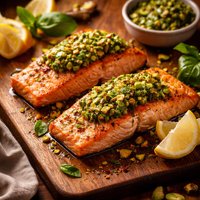
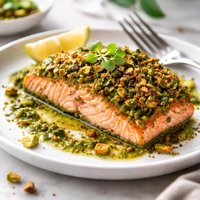
Elevate your dinner table with this vibrant and healthy Paleo Pistachio Crusted Salmon recipe! Perfectly tender salmon fillets are topped with a crisp, flavorful crust made from fresh parsley, garlic, lemon zest, and crunchy pistachios, providing a delightful blend of texture and taste. This recipe is gluten-free, dairy-free, and fit for a paleo diet, delivering a gourmet experience without compromising on nutrition. Ready in just 30 minutes, it’s an ideal weeknight meal or an impressive centerpiece for dinner parties. Pair it with roasted vegetables or a fresh green salad, and squeeze lemon wedges over the top for a bright, zesty finish. Bursting with flavor and health benefits, this Paleo Pistachio Crusted Salmon is sure to become a favorite in your meal rotation!

Smart Nutrition Tracking with SnapCalorie

Explore More
Recipe Information
Ingredients
- 4 pieces Salmon fillets
- 1 cup Pistachios (shelled and unsalted)
- 0.25 cup Fresh parsley
- 2 cloves Garlic
- 1 teaspoon Lemon zest
- 2 tablespoons Olive oil
- 0.5 teaspoon Salt
- 0.25 teaspoon Black pepper
- 1 serving Lemon wedges
Instructions
Preheat your oven to 375°F (190°C).
Place the pistachios, fresh parsley, and garlic cloves in a food processor. Pulse until the mixture is finely chopped.
Transfer the pistachio mixture to a bowl and mix in the lemon zest, salt, and black pepper.
Pat the salmon fillets dry with paper towels and brush each fillet with olive oil.
Press the pistachio mixture onto the top of each salmon fillet firmly, ensuring a good crust forms.
Place the crusted salmon fillets on a baking sheet lined with parchment paper.
Bake in the preheated oven for 12-15 minutes, or until the salmon flakes easily with a fork and has an internal temperature of 145°F (63°C).
Serve the salmon hot, with lemon wedges on the side for squeezing over the top.
Nutrition Facts
Calories |
455 | ||
|---|---|---|---|
% Daily Value* |
|||
| Total Fat | 33.9 g | 43% | |
| Saturated Fat | 4.5 g | 23% | |
| Polyunsaturated Fat | 0.0 g | ||
| Cholesterol | 50 mg | 17% | |
| Sodium | 347 mg | 15% | |
| Total Carbohydrate | 9.6 g | 3% | |
| Dietary Fiber | 4.5 g | 16% | |
| Total Sugars | 2.4 g | ||
| Protein | 32.3 g | 65% | |
| Vitamin D | 0.0 mcg | 0% | |
| Calcium | 41 mg | 3% | |
| Iron | 2.4 mg | 14% | |
| Potassium | 340 mg | 7% | |
*The % Daily Value tells you how much a nutrient in a serving of food contributes to a daily diet. 2,000 calories a day is used for general nutrition advice.


