Paleo Appam
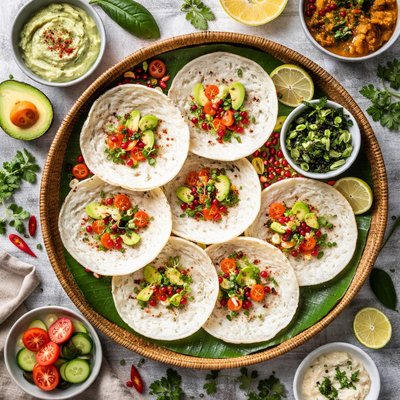
Delight in the wholesome goodness of Paleo Appam, a grain-free twist on the traditional South Indian rice pancakes. Made with coconut flour, tapioca starch, and rich coconut milk, this recipe is perfectly suited for paleo diets while preserving the light, airy texture appams are known for. Flavored with a hint of honey and naturally gluten-free, these appams boast delicate crispy edges and a soft, fluffy center. Quick to prepare with just a 15-minute prep time, they’re cooked in a non-stick pan to perfection and pair beautifully with paleo-friendly curries or chutneys. Whether for breakfast, dinner, or a mid-day treat, this nutritious and delicious recipe will bring an exotic, satisfying flavor to your table.

Smart Nutrition Tracking with SnapCalorie

Explore More
Recipe Information
Ingredients
- 0.5 cups Coconut flour
- 0.5 cups Tapioca starch
- 1.5 cups Coconut milk
- 0.75 cups Water
- 1 Egg
- 1 tablespoon Honey
- 1 teaspoon Baking powder
- 0.5 teaspoon Salt
- 2 tablespoons Coconut oil
Instructions
In a large mixing bowl, combine the coconut flour and tapioca starch. Mix well to avoid any lumps.
Slowly add the coconut milk and water to the flour mixture, stirring continuously to create a smooth batter.
In a separate bowl, whisk the egg with honey and salt until well combined.
Add the egg mixture to the batter along with the baking powder. Stir until all ingredients are well incorporated.
Let the batter rest for about 10 minutes to allow the flours to absorb the liquids, resulting in a thicker, smooth batter.
Heat a non-stick appam pan or a small frying pan over medium heat and lightly grease it with coconut oil.
Once the pan is hot, pour a ladleful of batter into the center of the pan. Gently swirl the pan to spread the batter into a thin circular shape, with a thicker, fluffy center and thinner edges.
Cover the pan with a lid and allow the appam to cook for about 2-3 minutes until the edges turn golden and start to lift from the pan.
Remove the lid and check if the appam has cooked through. The appam is done when it has a slight crispness at the edges and is soft in the middle.
Carefully remove the appam and place it on a serving plate. Repeat the steps with the remaining batter, greasing the pan lightly as needed.
Serve the Paleo Appams warm with your favorite paleo-friendly curry or chutney.
Nutrition Facts
Calories |
297 | ||
|---|---|---|---|
% Daily Value* |
|||
| Total Fat | 10.0 g | 13% | |
| Saturated Fat | 7.9 g | 39% | |
| Polyunsaturated Fat | 0.0 g | ||
| Cholesterol | 46 mg | 15% | |
| Sodium | 416 mg | 18% | |
| Total Carbohydrate | 49.2 g | 18% | |
| Dietary Fiber | 5.6 g | 20% | |
| Total Sugars | 12.9 g | ||
| Protein | 4.6 g | 9% | |
| Vitamin D | 0.3 mcg | 1% | |
| Calcium | 29 mg | 2% | |
| Iron | 1.7 mg | 9% | |
| Potassium | 180 mg | 4% | |
*The % Daily Value tells you how much a nutrient in a serving of food contributes to a daily diet. 2,000 calories a day is used for general nutrition advice.


