Pa Dutch Ham Salad
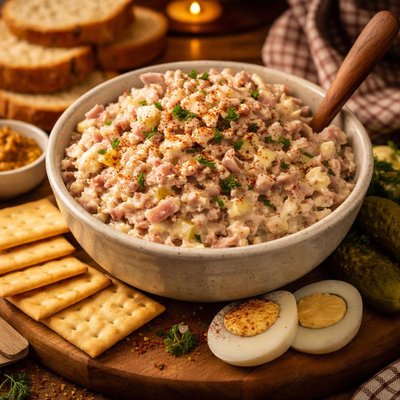
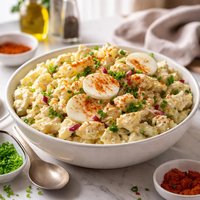
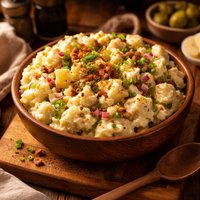
Brighten up your next meal with the irresistible charm of Pa Dutch Ham Salad, a timeless classic that brings together the bold flavors of smoky, diced ham and creamy hard-boiled eggs. This easy-to-make dish features a tangy-sweet blend of sweet pickle relish, mayonnaise, yellow mustard, and a touch of vinegar, perfectly balanced with a hint of sugar and finely minced onion for extra zest. Ready in just 15 minutes, plus a chill time for the flavors to meld, this versatile ham salad can be served as a filling for sandwiches, slathered on croissants, or paired with crackers for a crowd-pleasing appetizer. Packed with homestyle appeal and bursting with flavor, this Pennsylvania Dutch-inspired recipe is perfect for quick lunches, potlucks, or picnic spreads.

Smart Nutrition Tracking with SnapCalorie

Recipe Information
Ingredients
- 2 cups Cooked ham, diced
- 3 units Hard-boiled eggs, peeled and chopped
- 0.25 cup Sweet pickle relish
- 0.5 cup Mayonnaise
- 1 tablespoon Yellow mustard
- 1 teaspoon White vinegar
- 1 teaspoon Granulated sugar
- 2 tablespoons Onion, finely minced
- 0.5 teaspoon Salt
- 0.25 teaspoon Black pepper
Instructions
Place the diced cooked ham and chopped hard-boiled eggs into a food processor. Pulse the mixture 8-10 times or until it is finely chopped but not pureed. Alternatively, finely chop both ingredients by hand if a food processor is unavailable.
Transfer the chopped ham and eggs to a large mixing bowl.
Add the sweet pickle relish, mayonnaise, yellow mustard, white vinegar, granulated sugar, and minced onion to the bowl.
Sprinkle in the salt and black pepper, and mix everything together until well combined. Adjust seasoning to taste if necessary.
Cover and refrigerate the ham salad for at least 1 hour to allow the flavors to meld.
Serve as a sandwich filling on fresh bread, rolls, or croissants, or as a spread for crackers or celery sticks.
Nutrition Facts
Calories |
313 | ||
|---|---|---|---|
% Daily Value* |
|||
| Total Fat | 22.4 g | 29% | |
| Saturated Fat | 4.8 g | 24% | |
| Polyunsaturated Fat | 0.0 g | ||
| Cholesterol | 146 mg | 49% | |
| Sodium | 1445 mg | 63% | |
| Total Carbohydrate | 4.9 g | 2% | |
| Dietary Fiber | 0.1 g | 1% | |
| Total Sugars | 4.4 g | ||
| Protein | 20.9 g | 42% | |
| Vitamin D | 0.5 mcg | 3% | |
| Calcium | 21 mg | 2% | |
| Iron | 0.9 mg | 5% | |
| Potassium | 254 mg | 5% | |
*The % Daily Value tells you how much a nutrient in a serving of food contributes to a daily diet. 2,000 calories a day is used for general nutrition advice.


