Okara Hummus
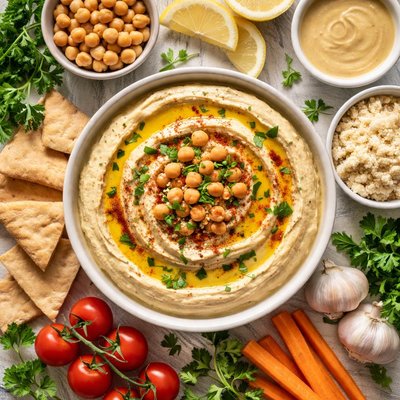
Elevate your hummus game with this creamy and protein-packed Okara Hummus, a sustainable twist on the classic Middle Eastern dip! This plant-based recipe repurposes okara—nutrient-rich soybean pulp left over from making soy milk—by blending it with chickpeas, tahini, zesty lemon juice, and aromatic garlic for a velvety, flavorful spread. Enhanced with olive oil, ground cumin, and a hint of paprika, this eco-friendly hummus is rich in fiber and protein, making it a nutritious choice for snacking or entertaining. Ready in just 10 minutes, it pairs perfectly with pita bread, fresh veggies, or as a sandwich spread. Reduce food waste while delighting your taste buds with this simple, wholesome recipe!

Smart Nutrition Tracking with SnapCalorie

Explore More

Recipe Information
Ingredients
- 1 cup Okara (soybean pulp)
- 1 cup Cooked chickpeas
- 3 tablespoons Tahini
- 3 tablespoons Lemon juice
- 2 cloves Garlic cloves
- 2 tablespoons Olive oil
- 1 teaspoon Ground cumin
- 1 teaspoon Paprika (optional, for garnish)
- 1 teaspoon Salt
- 3 tablespoons Water
Instructions
In a high-speed blender or food processor, combine the okara, cooked chickpeas, tahini, lemon juice, and garlic cloves.
Add olive oil, ground cumin, salt, and water to the blender. Blend until smooth, stopping to scrape down the sides as needed.
If the hummus is too thick, add an additional tablespoon of water at a time and blend until the desired consistency is reached.
Taste and adjust seasoning, adding more salt or lemon juice to suit your palate.
Transfer the hummus to a serving bowl and drizzle with a little extra olive oil. Sprinkle paprika on top for garnish, if desired.
Serve immediately with pita bread, vegetable sticks, or as a spread. Store any leftovers in an airtight container in the refrigerator for up to 5 days.
Nutrition Facts
Calories |
277 | ||
|---|---|---|---|
% Daily Value* |
|||
| Total Fat | 16.5 g | 21% | |
| Saturated Fat | 2.4 g | 12% | |
| Polyunsaturated Fat | 0.0 g | ||
| Cholesterol | 0 mg | 0% | |
| Sodium | 508 mg | 22% | |
| Total Carbohydrate | 26.0 g | 9% | |
| Dietary Fiber | 8.2 g | 29% | |
| Total Sugars | 3.2 g | ||
| Protein | 9.7 g | 19% | |
| Vitamin D | 0.0 mcg | 0% | |
| Calcium | 955 mg | 73% | |
| Iron | 4020.7 mg | 22337% | |
| Potassium | 334 mg | 7% | |
*The % Daily Value tells you how much a nutrient in a serving of food contributes to a daily diet. 2,000 calories a day is used for general nutrition advice.


