Mediterranean Diet Homemade Tartar Sauce
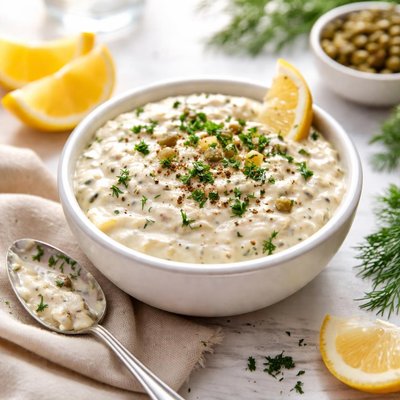
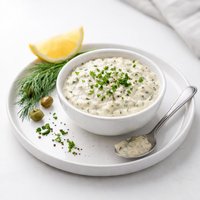
Elevate your seafood dishes with this vibrant and creamy Mediterranean Diet Homemade Tartar Sauce, a healthy twist on the classic condiment. Made with tangy Greek yogurt as the base, this recipe skips heavy mayo in favor of wholesome ingredients like extra virgin olive oil, zesty lemon juice, and Dijon mustard for a light and refreshing flavor profile. Finely chopped capers, dill pickles, and fresh parsley bring bursts of briny and herbaceous notes, while minced shallot adds a punch of savory depth. Ready in just 15 minutes, this easy-to-make sauce is the perfect accompaniment to grilled fish, seafood platters, or even as a zesty spread in sandwiches and wraps. Packed with Mediterranean-inspired flavors, this homemade tartar sauce is a guilt-free way to enhance any dish while keeping it deliciously wholesome.

Smart Nutrition Tracking with SnapCalorie

Recipe Information
Ingredients
- 1 cup Greek yogurt
- 2 tablespoons Extra virgin olive oil
- 1 tablespoon Lemon juice
- 1 teaspoon Dijon mustard
- 2 tablespoons Capers, drained and chopped
- 3 tablespoons Dill pickles, finely chopped
- 2 tablespoons Fresh parsley, chopped
- 1 small Shallot, minced
- 0.5 teaspoon Salt
- 0.25 teaspoon Black pepper
Instructions
In a mixing bowl, add Greek yogurt and olive oil. Stir until well combined and smooth.
Add lemon juice and Dijon mustard to the yogurt mixture, and whisk together until fully incorporated.
Stir in the chopped capers, dill pickles, chopped parsley, and minced shallot. Mix well to ensure even distribution of ingredients.
Season the mixture with salt and black pepper. Adjust seasoning according to taste.
Transfer the tartar sauce to a clean jar or airtight container.
Refrigerate the tartar sauce for at least 1 hour before serving to allow the flavors to meld together.
Serve chilled as a dip or condiment alongside seafood or use as a flavorful spread in sandwiches or wraps.
Nutrition Facts
Calories |
53 | ||
|---|---|---|---|
% Daily Value* |
|||
| Total Fat | 3.6 g | 5% | |
| Saturated Fat | 0.6 g | 3% | |
| Polyunsaturated Fat | 0.0 g | ||
| Cholesterol | 1 mg | 0% | |
| Sodium | 249 mg | 11% | |
| Total Carbohydrate | 1.9 g | 1% | |
| Dietary Fiber | 0.2 g | 1% | |
| Total Sugars | 1.4 g | ||
| Protein | 3.5 g | 7% | |
| Vitamin D | 0.0 mcg | 0% | |
| Calcium | 42 mg | 3% | |
| Iron | 0.2 mg | 1% | |
| Potassium | 69 mg | 1% | |
*The % Daily Value tells you how much a nutrient in a serving of food contributes to a daily diet. 2,000 calories a day is used for general nutrition advice.


