Low Sodium Traditional Cabbage Kimchi
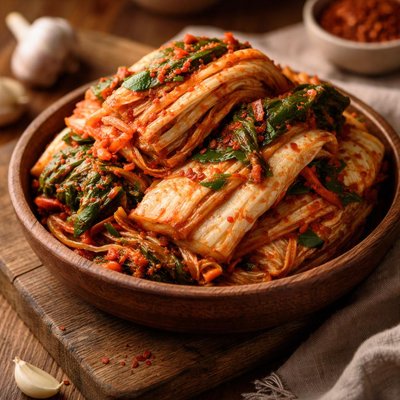
Experience the bold, tangy flavors of Korean cuisine with this Low Sodium Traditional Cabbage Kimchi recipe, perfect for health-conscious food lovers seeking reduced salt alternatives. Featuring nutrient-rich Napa cabbage, crisp julienned daikon radish and carrots, and aromatic garlic and ginger, this kimchi combines authentic ingredients with a low-sodium twist. A spicy paste of Korean red pepper flakes (gochugaru), low-sodium fish sauce, and a hint of sugar delivers that signature kick without overpowering your palate. The fermentation process transforms these wholesome ingredients into a probiotic-rich, gut-friendly dish that's delicious as a side, condiment, or creative addition to soups and stir-fries. Easy to prepare and packed with vibrant textures, this classic Korean staple will become a flavorful favorite in your refrigerator.

Smart Nutrition Tracking with SnapCalorie

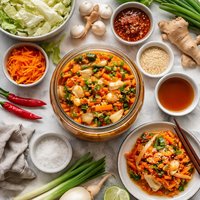
Recipe Information
Ingredients
- 1 large head Napa cabbage
- 1 medium (julienned) Daikon radish
- 1 medium (julienned) Carrot
- 6 stalks (chopped into 1-inch pieces) Green onions
- 2 tablespoons Kosher salt (low sodium)
- 8 cups Water
- 6 cloves (minced) Garlic
- 1 tablespoon (grated) Ginger
- 3 tablespoons Korean red pepper flakes (gochugaru)
- 2 tablespoons Fish sauce (low sodium)
- 1 teaspoon Sugar
Instructions
Cut the Napa cabbage lengthwise into quarters, then remove the core. Chop each quarter into bite-sized pieces.
Dissolve 2 tablespoons of low-sodium kosher salt in 8 cups of water. Submerge the chopped cabbage in the saltwater solution, ensuring it's covered completely. Let it soak for 1-2 hours, flipping the cabbage every 30 minutes to ensure even brining.
After soaking, rinse the cabbage thoroughly under cold water 2-3 times to remove excess salt. Drain well and set aside.
While the cabbage is soaking, prepare the vegetable mix. Julienne the daikon radish and carrot, and chop the green onions into 1-inch pieces.
In a small bowl, combine minced garlic, grated ginger, Korean red pepper flakes (gochugaru), low-sodium fish sauce, and sugar. Mix thoroughly to form a spicy paste.
In a large mixing bowl, combine the drained cabbage, prepared vegetables (daikon, carrot, and green onions), and the spicy paste. Use clean hands (preferably with gloves) to massage the paste into the vegetables, ensuring everything is evenly coated.
Pack the kimchi mixture tightly into a clean glass jar or airtight container, leaving about 1 inch of space at the top to allow for fermentation gases. Press down on the kimchi to remove any air pockets, ensuring the brine covers the vegetables completely.
Seal the jar and let it ferment at room temperature (65-75°F) for 2-3 days. Check daily to release any built-up gases by opening and closing the lid briefly.
Taste the kimchi after 2-3 days. If you prefer it more fermented, leave it out for another day or two. Once it reaches your desired level of tanginess, transfer the jar to the refrigerator to slow the fermentation process.
Enjoy your low-sodium kimchi as a side dish, condiment, or ingredient in your favorite recipes! It will keep in the refrigerator for up to 4 weeks.
Nutrition Facts
Calories |
42 | ||
|---|---|---|---|
% Daily Value* |
|||
| Total Fat | 1.1 g | 1% | |
| Saturated Fat | 0.0 g | 0% | |
| Polyunsaturated Fat | 0.0 g | ||
| Cholesterol | 0 mg | 0% | |
| Sodium | 829 mg | 36% | |
| Total Carbohydrate | 7.4 g | 3% | |
| Dietary Fiber | 2.8 g | 10% | |
| Total Sugars | 3.5 g | ||
| Protein | 2.5 g | 5% | |
| Vitamin D | 0.0 mcg | 0% | |
| Calcium | 94 mg | 7% | |
| Iron | 1.1 mg | 6% | |
| Potassium | 250 mg | 5% | |
*The % Daily Value tells you how much a nutrient in a serving of food contributes to a daily diet. 2,000 calories a day is used for general nutrition advice.


