Low Sodium Tonkotsu Broth
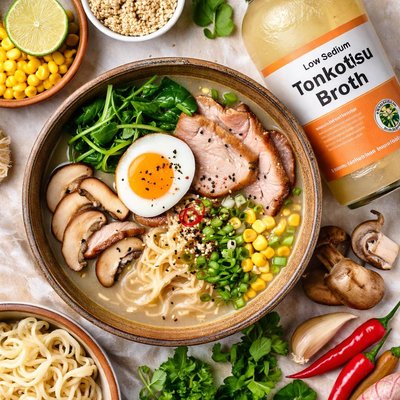
Indulge in the rich, creamy delight of this Low Sodium Tonkotsu Broth—a healthier twist on the beloved Japanese ramen classic. This recipe delivers all the deep, savory flavors of traditional tonkotsu broth but with a low-sodium approach, making it perfect for those watching their salt intake without sacrificing taste. Made by simmering pork femur bones, optional chicken carcass, and an aromatic medley of garlic, ginger, onion, leeks, dried shiitake mushrooms, and kombu, this broth achieves its luscious, silky texture with hours of slow cooking. A dash of white vinegar helps extract nutrients and collagen from the bones, resulting in a nutrient-rich base ideal for cozy ramen bowls or sipping on its own. With a cook time that lets the flavors intensify beautifully, this customization-friendly recipe allows you to finish with low-sodium seasonings and your favorite ramen toppings for a delicious, heart-healthy meal.

Smart Nutrition Tracking with SnapCalorie

Explore More
Recipe Information
Ingredients
- 2 pounds Pork femur bones or trotters
- 1 whole Chicken carcass (optional, for extra flavor)
- 1 large Yellow onion
- 1 head Garlic
- 2 inches Ginger
- 2 whole Leeks
- 4 pieces Dried shiitake mushrooms
- 1 sheet Kombu (dried kelp)
- 2 tablespoons White vinegar
- 16 cups Water
Instructions
Step 1: Begin by blanching the pork bones to remove impurities. Place the pork femur bones (and chicken carcass if using) in a large pot and cover with water. Bring to a boil and let it boil for 10 minutes. Drain and rinse the bones thoroughly under cold running water to remove any scum or residue.
Step 2: Rinse the pot, then return the cleaned bones to it. Add 16 cups of water, white vinegar, and any other aromatics you’d like to include. Turn the heat to medium-high and allow the broth to come to a simmer.
Step 3: While the water is heating, prepare the aromatics. Peel and quarter the yellow onion. Cut the head of garlic in half crosswise. Slice the ginger into thick coins. Rinse the leeks and cut them into large pieces.
Step 4: Add the prepared onion, garlic, ginger, leeks, kombu, and dried shiitake mushrooms to the pot. Reduce the heat to maintain a gentle simmer and cover partially with a lid.
Step 5: Simmer the broth on low heat for approximately 12 hours for the best flavor and collagen extraction. Skim any fat or scum that rises to the surface using a fine-mesh skimmer or ladle every few hours.
Step 6: After 12 hours, carefully strain the broth through a fine-mesh sieve or cheesecloth-lined strainer into a clean pot or large container. Discard the solids.
Step 7: Allow the broth to cool and scrape off any fat that solidifies on the surface. For best results, refrigerate the broth overnight to let the flavors develop further.
Step 8: Before serving, reheat the broth and adjust the seasoning lightly if needed. To keep it low sodium, skip adding salt directly and let diners customize their bowls with low-sodium soy sauce or miso paste to their preference.
Step 9: Serve as the base for ramen bowls complete with noodles, soft-boiled eggs, and toppings of your choice, or enjoy the broth as is for a flavorful and comforting sip.
Nutrition Facts
Calories |
581 | ||
|---|---|---|---|
% Daily Value* |
|||
| Total Fat | 34.2 g | 44% | |
| Saturated Fat | 10.4 g | 52% | |
| Polyunsaturated Fat | 0.0 g | ||
| Cholesterol | 179 mg | 60% | |
| Sodium | 248 mg | 11% | |
| Total Carbohydrate | 13.3 g | 5% | |
| Dietary Fiber | 2.8 g | 10% | |
| Total Sugars | 2.8 g | ||
| Protein | 51.3 g | 103% | |
| Vitamin D | 1.3 mcg | 6% | |
| Calcium | 172 mg | 13% | |
| Iron | 3.8 mg | 21% | |
| Potassium | 661 mg | 14% | |
*The % Daily Value tells you how much a nutrient in a serving of food contributes to a daily diet. 2,000 calories a day is used for general nutrition advice.


