Low Sodium Sourdough Turmeric Sunflower Bread
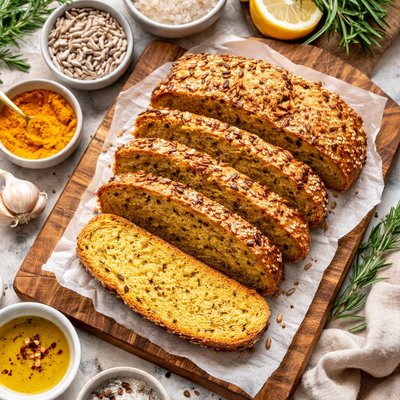
Elevate your homemade bread game with this Low Sodium Sourdough Turmeric Sunflower Bread—a stunning fusion of health, flavor, and artisanal charm. This delightful recipe combines the tangy complexity of sourdough with the earthy, golden warmth of turmeric powder and the nutty crunch of unsalted sunflower seeds. Perfect for those looking to reduce sodium without compromising on taste, this bread boasts a vibrant color and subtle sweetness from a touch of honey. The overnight cold fermentation enhances its flavor and makes handling the dough a breeze, while the stretch-and-fold technique ensures a perfectly airy crumb. Whether enjoyed as a show-stopping centerpiece for your brunch table or simply toasted for breakfast, this low-sodium turmeric sourdough is a wholesome, satisfying addition to your recipe rotation.

Smart Nutrition Tracking with SnapCalorie


Recipe Information
Ingredients
- 120 grams Sourdough starter (active and bubbly)
- 200 grams Whole wheat flour
- 300 grams Bread flour
- 375 milliliters Warm water (not hot)
- 2 teaspoons Turmeric powder
- 50 grams Shelled sunflower seeds (unsalted)
- 1 tablespoon Honey
Instructions
In a large mixing bowl, combine the sourdough starter, warm water, and honey. Stir until the starter is fully dissolved.
Add the whole wheat flour, bread flour, and turmeric powder to the wet mixture. Mix until a shaggy dough forms.
Let the dough rest for 30 minutes (autolyse phase). This helps hydrate the flour and develop gluten naturally.
After resting, add the sunflower seeds to the dough. Knead or fold the dough gently to incorporate the seeds evenly.
Perform 4 sets of stretch-and-folds over a 2-hour period, spacing them 30 minutes apart. To do this, grab a corner of the dough, stretch it upwards, and fold it over itself. Rotate the bowl and repeat for all four corners.
Cover the bowl with a damp cloth or plastic wrap and let the dough bulk ferment at room temperature for 4-6 hours, depending on the temperature of your kitchen. The dough should almost double in size.
Once bulk fermentation is complete, turn the dough out onto a lightly floured surface. Shape it into a round or oval loaf, depending on your preference.
Place the shaped dough into a floured proofing basket or bowl, seam side up. Cover and refrigerate overnight (8-12 hours) for cold fermentation. This enhances the flavor and makes the dough easier to handle.
Preheat your oven to 250°C (475°F) with a Dutch oven or baking stone inside. Allow it to heat for at least 30 minutes to ensure even baking.
Carefully transfer the dough onto a piece of parchment paper and score the top with a sharp knife or bread lame to allow for controlled expansion during baking.
Place the dough (with the parchment paper) into the preheated Dutch oven or onto the baking stone. Cover the Dutch oven with its lid if using.
Bake for 20 minutes with the lid on, then remove the lid and bake for an additional 15 minutes to develop a golden crust.
Remove the bread from the oven and let it cool completely on a wire rack before slicing and serving.
Nutrition Facts
Calories |
183 | ||
|---|---|---|---|
% Daily Value* |
|||
| Total Fat | 2.7 g | 3% | |
| Saturated Fat | 0.4 g | 2% | |
| Polyunsaturated Fat | 0.0 g | ||
| Cholesterol | 0 mg | 0% | |
| Sodium | 2 mg | 0% | |
| Total Carbohydrate | 34.6 g | 13% | |
| Dietary Fiber | 2.8 g | 10% | |
| Total Sugars | 1.7 g | ||
| Protein | 5.9 g | 12% | |
| Vitamin D | 0.0 mcg | 0% | |
| Calcium | 14 mg | 1% | |
| Iron | 1.9 mg | 10% | |
| Potassium | 117 mg | 2% | |
*The % Daily Value tells you how much a nutrient in a serving of food contributes to a daily diet. 2,000 calories a day is used for general nutrition advice.


