Low Sodium Seared Ahi Tuna
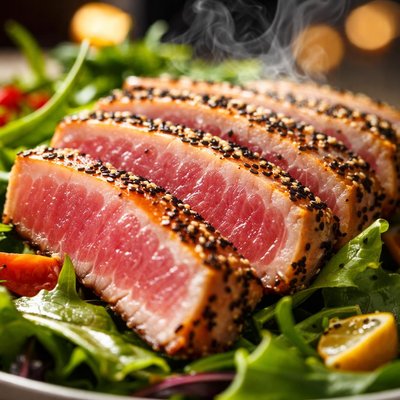
Elevate your seafood game with this easy and flavorful Low Sodium Seared Ahi Tuna recipe! Perfectly seasoned with a zesty blend of olive oil, lemon juice, black pepper, garlic powder, and a touch of red pepper flakes, this dish is a heart-healthy alternative to traditional tuna recipes. Quick to prepare—ready in just 16 minutes—these seared ahi tuna steaks boast a golden crust with a tender, rare center, delivering restaurant-quality results right from your kitchen. Garnished with fresh parsley and served alongside lemon wedges for a burst of brightness, this low-sodium recipe is ideal for weeknight dinners, light lunches, or special occasions. Pair it with a crisp side salad or steamed veggies for a balanced and delicious meal!
Train Anywhere. No Excuses.
Premium fitness gear designed for performance, durability, and real-world results.
From home to gym to on-the-go
Recipe Information
Ingredients
- 2 pieces (6 oz each) Ahi tuna steaks
- 2 tablespoons Olive oil
- 1 tablespoon Lemon juice
- 0.5 teaspoon Black pepper
- 0.5 teaspoon Garlic powder
- 0.25 teaspoon Onion powder
- 0.25 teaspoon Red pepper flakes
- 2 tablespoons, chopped Fresh parsley
- 2 for serving Lemon wedges
Instructions
Pat the ahi tuna steaks dry with paper towels to remove any excess moisture.
In a small bowl, mix together olive oil, lemon juice, black pepper, garlic powder, onion powder, and red pepper flakes to form a marinade.
Coat each tuna steak thoroughly with the prepared marinade, ensuring even coverage on both sides.
Preheat a non-stick skillet over medium-high heat until hot, about 2-3 minutes.
Add the marinated tuna steaks to the skillet and sear for about 2-3 minutes on each side, depending on the desired level of doneness (for rare tuna, aim for 2 minutes per side).
Remove the tuna steaks from the skillet and let them rest for a minute before slicing.
Slice the tuna steaks against the grain and sprinkle with freshly chopped parsley.
Serve the seared ahi tuna with lemon wedges on the side for an extra burst of citrus flavor.
Nutrition Facts
Calories |
317 | ||
|---|---|---|---|
% Daily Value* |
|||
| Total Fat | 15.2 g | 19% | |
| Saturated Fat | 2.5 g | 12% | |
| Polyunsaturated Fat | 0.0 g | ||
| Cholesterol | 60 mg | 20% | |
| Sodium | 81 mg | 4% | |
| Total Carbohydrate | 5.0 g | 2% | |
| Dietary Fiber | 1.6 g | 6% | |
| Total Sugars | 1.6 g | ||
| Protein | 39.9 g | 80% | |
| Vitamin D | 5.9 mcg | 29% | |
| Calcium | 35 mg | 3% | |
| Iron | 2.3 mg | 13% | |
| Potassium | 731 mg | 16% | |
*The % Daily Value tells you how much a nutrient in a serving of food contributes to a daily diet. 2,000 calories a day is used for general nutrition advice.



