Low Sodium Refreshing Seaweed Salad
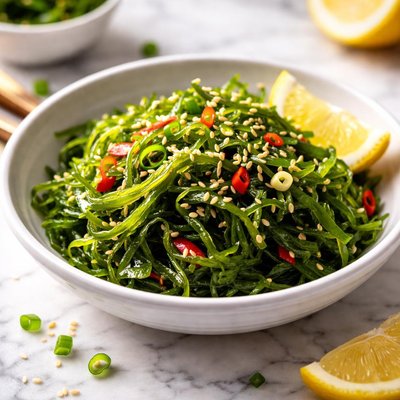
Brighten up your meals with this Low Sodium Refreshing Seaweed Salad, a vibrant and health-conscious dish packed with fresh, crunchy vegetables and the umami of nutrient-rich wakame seaweed. Perfectly balanced with a tangy lime and rice vinegar dressing, this recipe boasts layers of flavor enhanced by a touch of honey, ginger, and sesame oil, while keeping sodium levels low with the use of low sodium soy sauce. Ready in just 15 minutes, this no-cook salad is ideal as a refreshing appetizer or light side dish. Topped with toasted sesame seeds, it's a visually stunning dish that is as nourishing as it is delicious.

Smart Nutrition Tracking with SnapCalorie

Recipe Information
Ingredients
- 1 cup Dried wakame seaweed
- 1 medium Cucumber
- 1 medium Carrot
- 0.5 Red bell pepper
- 2 stalks Green onions
- 1 tablespoon Toasted sesame seeds
- 2 tablespoons Lime juice
- 1 tablespoon Rice vinegar
- 1 teaspoon Low sodium soy sauce
- 1 teaspoon Sesame oil
- 1 teaspoon Honey
- 1 teaspoon Fresh ginger
Instructions
Soak the dried wakame seaweed in a bowl of cold water for about 10 minutes, or until it expands and becomes tender. Drain and gently squeeze out excess water. Set aside.
Peel and julienne the carrot into thin strips.
Thinly slice the cucumber; if desired, remove seeds before slicing.
Deseed the red bell pepper and cut into thin strips.
Finely chop the green onions.
In a small bowl, prepare the dressing by combining lime juice, rice vinegar, low sodium soy sauce, sesame oil, honey, and freshly grated ginger. Mix well.
In a large bowl, combine the rehydrated wakame seaweed, cucumber, carrot, red bell pepper, and green onions.
Pour the dressing over the salad and toss gently to ensure all the ingredients are coated.
Sprinkle toasted sesame seeds over the top.
Chill the salad for at least 15 minutes before serving to allow flavors to meld.
Serve chilled as an appetizer or side dish.
Nutrition Facts
Calories |
356 | ||
|---|---|---|---|
% Daily Value* |
|||
| Total Fat | 7.9 g | 10% | |
| Saturated Fat | 1.2 g | 6% | |
| Polyunsaturated Fat | 1.4 g | ||
| Cholesterol | 0 mg | 0% | |
| Sodium | 5499 mg | 239% | |
| Total Carbohydrate | 67.5 g | 25% | |
| Dietary Fiber | 29.5 g | 105% | |
| Total Sugars | 6.5 g | ||
| Protein | 20.0 g | 40% | |
| Vitamin D | 0.0 mcg | 0% | |
| Calcium | 971 mg | 75% | |
| Iron | 13.7 mg | 76% | |
| Potassium | 1263 mg | 27% | |
*The % Daily Value tells you how much a nutrient in a serving of food contributes to a daily diet. 2,000 calories a day is used for general nutrition advice.


