Low Sodium Radish Kimchi
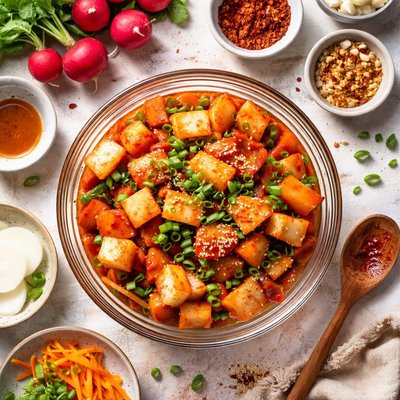
Discover the vibrant flavors of Low Sodium Radish Kimchi, a lighter twist on the traditional Korean favorite that's perfect for health-conscious food lovers. This recipe balances the crunch of daikon radish and carrot matchsticks with the savory warmth of garlic, fresh ginger, and Korean red pepper flakes (gochugaru), all wrapped in a tangy seasoning blend featuring reduced sodium soy sauce and rice vinegar. With just 30 minutes of prep and a short fermentation period, this homemade kimchi is simple to prepare and packed with bold, umami-rich flavor without excess salt. Enjoy it as a zesty side dish, a topping for rice bowls, or a standalone snack to elevate your meals with a nutritious, probiotic-packed punch. Ideal for those looking to indulge in Korean cuisine while maintaining a low-sodium diet, this recipe is the perfect introduction to DIY fermentation and wholesome eating.

Smart Nutrition Tracking with SnapCalorie

Explore More

Recipe Information
Ingredients
- 1.5 pounds Daikon radish
- 1 medium Carrot
- 4 stalks Green onions
- 6 large Garlic cloves
- 1 inch Fresh ginger
- 3 tablespoons Korean red pepper flakes (Gochugaru)
- 2 tablespoons Rice vinegar
- 2 tablespoons Reduced sodium soy sauce
- 1 teaspoon Sugar
- 0.5 cup Water
Instructions
Wash and peel the daikon radish and carrot. Cut the radish into small cubes about 1-inch thick and the carrot into thin matchsticks.
Chop the green onions into approximately 1-inch pieces.
Peel the garlic cloves and ginger, then finely mince both or grate using a microplane.
In a large bowl, combine the daikon radish cubes and carrot matchsticks. Add the chopped green onions, minced garlic, and ginger.
In a small bowl, mix the Korean red pepper flakes, rice vinegar, reduced sodium soy sauce, sugar, and water to make a seasoning paste.
Pour the seasoning paste over the vegetable mixture. Using your hands, wearing gloves to protect from the pepper flakes, thoroughly combine the ingredients until the radish and carrots are evenly coated in the paste.
Transfer the mixture into a clean glass jar or airtight container. Use a spoon or your hand to press the vegetables down to release natural juices, ensuring they are submerged.
Seal the container and leave it at room temperature for 24-48 hours to ferment, depending on the desired taste. Check periodically to press down the vegetables to keep them submerged.
Once it's achieved the desired fermentation, store the kimchi in the refrigerator. It can be consumed immediately but develops more flavor over time.
Nutrition Facts
Calories |
77 | ||
|---|---|---|---|
% Daily Value* |
|||
| Total Fat | 3.5 g | 5% | |
| Saturated Fat | 0.9 g | 4% | |
| Polyunsaturated Fat | 0.9 g | ||
| Cholesterol | 2 mg | 1% | |
| Sodium | 385 mg | 17% | |
| Total Carbohydrate | 11.0 g | 4% | |
| Dietary Fiber | 3.5 g | 13% | |
| Total Sugars | 4.2 g | ||
| Protein | 2.3 g | 5% | |
| Vitamin D | 0.0 mcg | 0% | |
| Calcium | 56 mg | 4% | |
| Iron | 0.9 mg | 5% | |
| Potassium | 438 mg | 9% | |
*The % Daily Value tells you how much a nutrient in a serving of food contributes to a daily diet. 2,000 calories a day is used for general nutrition advice.


