Low Sodium Peking Duck
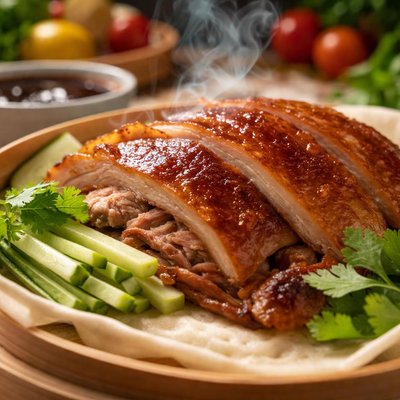
Experience the rich, indulgent flavors of **Low Sodium Peking Duck**, a healthier twist on the classic Chinese masterpiece. This recipe pairs the succulent, crisp-skinned duck you adore with a meticulously crafted, low-sodium marinade that combines aromatic ginger, garlic, Chinese five-spice powder, and honey for a perfect balance of savory and sweet. A final glaze of low-sodium hoisin sauce and sesame oil enhances the dish’s depth without overload on salt. With step-by-step techniques like boiling ice water for tightened skin and slow roasting for tender meat, this dish is ideal for special occasions or an elevated dinner at home. Serve with traditional accompaniments like steamed buns or pancakes—and don’t forget the rich, flavorful sauce made from pan drippings! Perfect for those seeking a low-sodium, high-flavor alternative, this recipe ensures a satisfying meal that doesn’t compromise on authenticity.

Smart Nutrition Tracking with SnapCalorie


Recipe Information
Ingredients
- 4 pounds Pekin duck
- 0.5 cup Low sodium soy sauce
- 4 tablespoons Honey
- 2 teaspoons Chinese five-spice powder
- 2 tablespoons Rice vinegar
- 2 inches Ginger root, sliced
- 3 pieces Scallions, finely chopped
- 4 pieces Garlic cloves, minced
- 0.5 cup Hoisin sauce (low sodium)
- 1 teaspoon Sesame oil
- 6 cups Ice water
- 2 tablespoons Cornstarch
- 2 tablespoons Water
Instructions
Begin by cleaning the duck: Remove any excess fat and rinse the duck thoroughly under cold water. Pat the skin dry with paper towels.
In a large mixing bowl, prepare the marinade by combining the low sodium soy sauce, honey, Chinese five-spice powder, rice vinegar, ginger root, scallions, and garlic.
Place the duck on a wire rack set over a shallow dish. Pour the marinade evenly over the duck, ensuring it covers all parts, especially the skin. Allow the duck to marinate in the refrigerator for at least 12 hours or overnight for best results.
Preheat the oven to 375°F (190°C).
Remove the duck from the refrigerator and bring it to room temperature. Boil a pot of the 6 cups of ice water, then carefully pour it over the duck skin to tighten it. Let the duck dry at room temperature for 30 minutes.
Place the duck breast-side up on a roasting rack in a roasting pan. Roast the duck in the preheated oven for 1.5 hours, basting occasionally with the drippings.
Increase the oven temperature to 425°F (220°C) and roast for another 20-30 minutes to crisp up the skin, watching carefully to prevent burning.
While roasting, prepare a low-sodium hoisin sauce glaze by combining the low sodium hoisin sauce with a teaspoon of sesame oil in a small bowl.
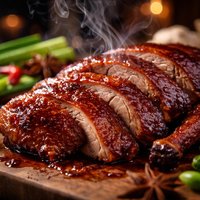
In the last 10 minutes, brush the prepared hoisin glaze all over the duck to add a flavorful and glossy finish.
Once cooked, remove the duck from the oven and let it rest for 10 minutes before carving.
Combine the cornstarch and 2 tablespoons of water to make a slurry. Add this slurry to the remaining pan drippings over medium heat, stirring until thickened to make a sauce.
Serve the carved duck with the sauce on the side or brushed lightly on pieces. Enjoy your low sodium Peking Duck with traditional accompaniments like rolled pancakes or steamed buns.
Nutrition Facts
Calories |
1168 | ||
|---|---|---|---|
% Daily Value* |
|||
| Total Fat | 88.7 g | 114% | |
| Saturated Fat | 28.9 g | 145% | |
| Polyunsaturated Fat | 1.3 g | ||
| Cholesterol | 254 mg | 85% | |
| Sodium | 1202 mg | 52% | |
| Total Carbohydrate | 28.9 g | 11% | |
| Dietary Fiber | 0.6 g | 2% | |
| Total Sugars | 20.1 g | ||
| Protein | 61.0 g | 122% | |
| Vitamin D | 0.9 mcg | 5% | |
| Calcium | 75 mg | 6% | |
| Iron | 9.4 mg | 52% | |
| Potassium | 808 mg | 17% | |
*The % Daily Value tells you how much a nutrient in a serving of food contributes to a daily diet. 2,000 calories a day is used for general nutrition advice.


