
Low Sodium Honey Mustard Chicken
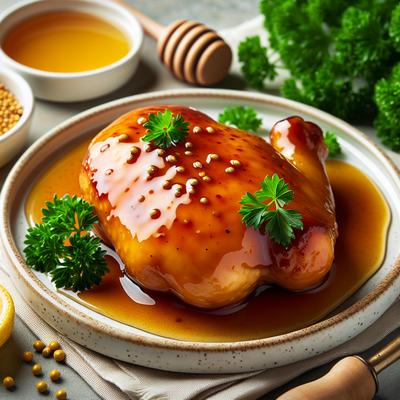
Savor the perfect balance of sweet and tangy with this Low Sodium Honey Mustard Chicken recipe, a heart-healthy twist on a classic favorite. In just 40 minutes, tender, juicy chicken breasts are baked to perfection in a flavorful glaze made from low sodium Dijon mustard, honey, olive oil, and a medley of fragrant herbs like thyme and rosemary. Ideal for those watching their sodium intake, this recipe offers bold and satisfying flavors without compromising on nutrition. Simple to prepare yet wonderfully complex in taste, this dish pairs beautifully with roasted vegetables or a fresh green salad for a wholesome, crowd-pleasing meal. Perfect for weeknight dinners or meal prepping, it’s a delightful way to eat clean without sacrificing flavor.

Log this recipe in SnapCalorie

Recipe Information
Ingredients
- 4 pieces Chicken breast halves, boneless and skinless
- 0.25 cup Honey
- 0.25 cup Dijon mustard (low sodium)
- 2 tablespoons Olive oil
- 1 tablespoon Apple cider vinegar
- 2 cloves Garlic, minced
- 0.5 teaspoon Onion powder
- 0.5 teaspoon Black pepper, freshly ground
- 0.5 teaspoon Paprika
- 0.5 teaspoon Dried thyme
- 0.5 teaspoon Dried rosemary, crushed
- 2 tablespoons Fresh parsley, chopped (optional for garnish)
Instructions
Preheat your oven to 375°F (190°C).
In a mixing bowl, whisk together honey, low sodium Dijon mustard, olive oil, apple cider vinegar, and minced garlic until well combined.
Add the onion powder, black pepper, paprika, dried thyme, and dried rosemary to the honey mustard mixture. Mix well to incorporate all the spices.
Place the chicken breasts in a shallow baking dish. Pour the honey mustard sauce over the chicken, ensuring that each piece is well coated.
Bake in the preheated oven for 20-25 minutes or until the chicken is cooked through and no longer pink in the center. The internal temperature should reach 165°F (74°C).
Remove the chicken from the oven and let it rest for 5 minutes before serving.
Garnish with fresh parsley if desired and serve warm.
Nutrition Facts
Calories |
1646 | ||
|---|---|---|---|
% Daily Value* |
|||
| Total Fat | 54.6 g | 70% | |
| Saturated Fat | 11.4 g | 57% | |
| Polyunsaturated Fat | 2.7 g | ||
| Cholesterol | 592 mg | 197% | |
| Sodium | 705 mg | 31% | |
| Total Carbohydrate | 57.0 g | 21% | |
| Dietary Fiber | 2.8 g | 10% | |
| Total Sugars | 50.4 g | ||
| Protein | 219.5 g | 439% | |
| Vitamin D | 0.2 mcg | 1% | |
| Calcium | 151 mg | 12% | |
| Iron | 9.6 mg | 53% | |
| Potassium | 2036 mg | 43% | |
*The % Daily Value tells you how much a nutrient in a serving of food contributes to a daily diet. 2,000 calories a day is used for general nutrition advice.


