Low Sodium Homemade Sourdough Bread
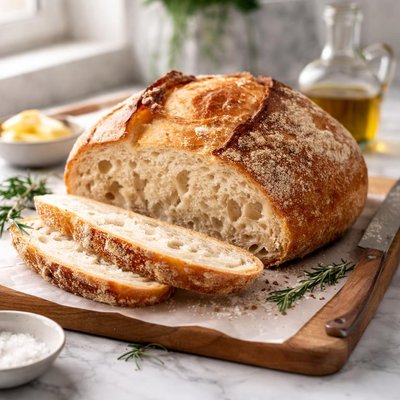
Light, tangy, and bursting with wholesome flavor, this low sodium homemade sourdough bread is a perfect blend of simplicity and craftsmanship. Made with just a handful of pantry staples—active sourdough starter, all-purpose and whole wheat flours, and a touch of salt—this recipe delivers a healthier version of the classic sourdough without compromising taste. Featuring an overnight cold ferment for maximum depth of flavor and a delightfully airy crumb, this bread is baked to perfection in a Dutch oven for a crispy, golden crust. Whether enjoyed fresh, toasted, or as a base for your favorite low-salt toppings, this artisan-style loaf is a must-try for anyone seeking a reduced-sodium bread that's just as satisfying. Perfect for beginners and seasoned bakers alike, every bite showcases the beautiful balance of texture and flavor that sourdough is known for.

Smart Nutrition Tracking with SnapCalorie

Explore More


Recipe Information
Ingredients
- 50 grams Sourdough starter
- 300 milliliters Water
- 450 grams All-purpose flour
- 50 grams Whole wheat flour
- 3 grams Salt
Instructions
1. Feed your sourdough starter the night before baking: Mix equal parts water and flour into your starter, stir well, and let it sit at room temperature for 8-12 hours.
2. In a large mixing bowl, combine 50 grams of active sourdough starter with 300 milliliters of water. Stir until the starter is mostly dissolved.
3. Add 450 grams of all-purpose flour and 50 grams of whole wheat flour to the hydrated starter. Mix the ingredients with your hands or a wooden spoon until you form a cohesive dough.
4. Let the dough rest covered for about 30 minutes to 1 hour for autolyse, helping the flour absorb water and enzymatic activity to begin.
5. After the autolyse, sprinkle 3 grams of salt over the dough. Knead the dough in the bowl by hand for about 5-7 minutes until the salt is fully incorporated and the dough becomes slightly smoother.
6. Cover the bowl with a damp cloth and let the dough rise at room temperature for 4-6 hours. Perform 3-4 sets of stretch and folds during this time at 30-minute intervals: Wet your hand, grab one side of the dough, stretch it up, and fold it over itself. Rotate the bowl and repeat the process for all four sides.
7. Once the dough has risen by about 50%, turn it out onto a lightly floured surface. Shape it into a tight ball by folding the edges towards the center, giving it tension on the surface.
8. Place the shaped dough seam-side up in a floured banneton or bowl lined with a floured cloth. Cover and refrigerate overnight or for at least 12 hours.
9. Preheat your oven to 450°F (230°C) with a Dutch oven inside for 30 minutes before baking.
10. Carefully remove the hot Dutch oven from the oven. Take the dough from the fridge and gently turn it out onto a piece of parchment paper.
11. Score the top of the dough with a sharp knife or razor blade to allow it to expand in the oven.
12. Carefully place the dough with the parchment paper into the preheated Dutch oven. Cover with the lid and bake for 20 minutes.
13. After 20 minutes, remove the lid and continue to bake for an additional 15 minutes or until the bread is browned and sounds hollow when tapped.
14. Allow the bread to cool on a wire rack for at least 1 hour before slicing. This helps finish the cooking process and lets the crumb set.
15. Enjoy your delicious low sodium sourdough bread plain, toasted, or with your favorite low-salt toppings.
Nutrition Facts
Calories |
158 | ||
|---|---|---|---|
% Daily Value* |
|||
| Total Fat | 0.4 g | 1% | |
| Saturated Fat | 0.1 g | 0% | |
| Polyunsaturated Fat | 0.0 g | ||
| Cholesterol | 0 mg | 0% | |
| Sodium | 99 mg | 4% | |
| Total Carbohydrate | 33.1 g | 12% | |
| Dietary Fiber | 1.5 g | 5% | |
| Total Sugars | 0.1 g | ||
| Protein | 4.6 g | 9% | |
| Vitamin D | 0.0 mcg | 0% | |
| Calcium | 9 mg | 1% | |
| Iron | 1.6 mg | 9% | |
| Potassium | 49 mg | 1% | |
*The % Daily Value tells you how much a nutrient in a serving of food contributes to a daily diet. 2,000 calories a day is used for general nutrition advice.


