Low Sodium Himalayan Pink Salt Popcorn
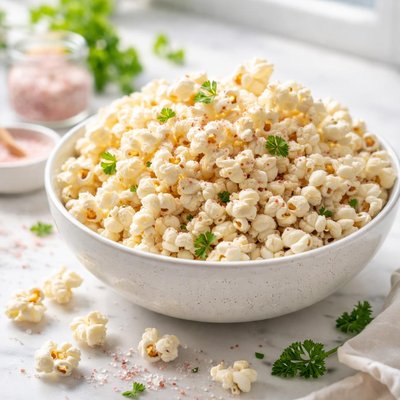
Indulge in a guilt-free snack with this Low Sodium Himalayan Pink Salt Popcorn recipe—a perfect balance of simplicity, flavor, and wholesome ingredients. Made with just three pantry staples—popcorn kernels, coconut oil, and a pinch of Himalayan pink salt—this recipe offers a naturally low-sodium twist on a classic favorite. The subtle mineral-rich taste of Himalayan pink salt enhances each fluffy kernel, while coconut oil delivers a satisfying crunch and a light, buttery aroma. Ready in just 15 minutes, this easy homemade popcorn is the ultimate healthy snack for movie nights, parties, or midafternoon cravings. Perfect for health-conscious snackers seeking a flavorful, low-sodium alternative, this popcorn is proof that you don’t need to compromise on taste!

Smart Nutrition Tracking with SnapCalorie

Recipe Information
Ingredients
- 0.5 cup Popcorn kernels
- 2 tablespoons Coconut oil
- 0.25 teaspoon Himalayan pink salt
Instructions
Place a large heavy-bottomed pot on the stove over medium heat and add the coconut oil.
To test if the oil is hot enough, add 2-3 popcorn kernels into the pot and cover with a lid.
Once these kernels pop, add the remaining popcorn kernels to the pot in an even layer.
Cover the pot with a lid slightly ajar to allow steam to escape without letting the popcorn fall out.
Shake the pot occasionally to ensure even cooking and prevent burning.
Once the popcorn popping slows to about 1 pop every 2 seconds, remove the pot from heat and immediately transfer the popcorn into a large bowl.
Sprinkle the Himalayan pink salt over the popcorn and toss to evenly distribute.
Serve warm and enjoy your lightly salted, low-sodium snack!
Nutrition Facts
Calories |
129 | ||
|---|---|---|---|
% Daily Value* |
|||
| Total Fat | 7.6 g | 10% | |
| Saturated Fat | 6.0 g | 30% | |
| Polyunsaturated Fat | 0.0 g | ||
| Cholesterol | 0 mg | 0% | |
| Sodium | 116 mg | 5% | |
| Total Carbohydrate | 13.9 g | 5% | |
| Dietary Fiber | 2.5 g | 9% | |
| Total Sugars | 0.2 g | ||
| Protein | 2.0 g | 4% | |
| Vitamin D | 0.0 mcg | 0% | |
| Calcium | 1 mg | 0% | |
| Iron | 0.5 mg | 3% | |
| Potassium | 51 mg | 1% | |
*The % Daily Value tells you how much a nutrient in a serving of food contributes to a daily diet. 2,000 calories a day is used for general nutrition advice.


