Low Sodium Cucumber Tomato Salad
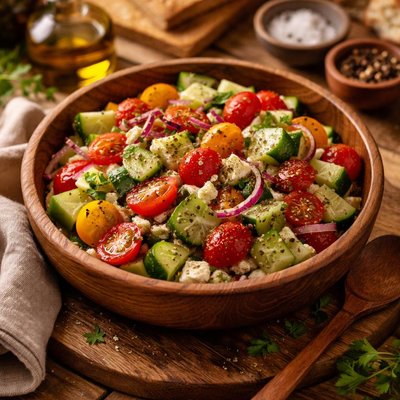
Fresh, vibrant, and heart-healthy, this Low Sodium Cucumber Tomato Salad is the perfect addition to your wholesome eating routine. Packed with crisp cucumbers, juicy tomatoes, zesty red onion, and fragrant basil, this salad celebrates simple, garden-fresh flavors without the need for added salt. A light vinaigrette made with extra virgin olive oil, red wine vinegar, and a splash of lemon juice ties everything together, delivering a tangy finish that enhances every bite. Ready in just 15 minutes and perfectly suited for a low-sodium diet, this refreshing salad is an ideal side dish for summer gatherings, meal prep lunches, or a guilt-free snack anytime. Bursting with nutrients and bold flavors, it’s a must-try for anyone seeking healthy yet delicious recipe ideas!

Smart Nutrition Tracking with SnapCalorie

Explore More
Recipe Information
Ingredients
- 2 large Cucumber
- 3 medium Tomatoes
- 0.5 medium Red onion
- 0.5 cup Fresh basil leaves
- 2 tablespoons Extra virgin olive oil
- 1 tablespoon Red wine vinegar
- 1 tablespoon Lemon juice
- 0.25 teaspoon Black pepper
Instructions
Wash the cucumbers and tomatoes thoroughly under running water.
Peel the cucumbers if desired. Slice them into thin rounds.
Core the tomatoes and cut them into bite-sized wedges.
Peel the red onion half and slice it thinly into half-moons.
Stack the fresh basil leaves, roll them tightly, and slice them into thin ribbons (a technique known as chiffonade).
In a small bowl, combine extra virgin olive oil, red wine vinegar, lemon juice, and black pepper. Whisk together until well blended.
In a large salad bowl, combine the cucumber slices, tomato wedges, onion slices, and basil ribbons.
Drizzle the vinaigrette over the salad and gently toss to combine all ingredients evenly.
Taste and adjust seasoning if needed. Allow the salad to sit for 5-10 minutes to let the flavors meld before serving.
Nutrition Facts
Calories |
114 | ||
|---|---|---|---|
% Daily Value* |
|||
| Total Fat | 6.9 g | 9% | |
| Saturated Fat | 0.9 g | 5% | |
| Polyunsaturated Fat | 0.0 g | ||
| Cholesterol | 0 mg | 0% | |
| Sodium | 9 mg | 0% | |
| Total Carbohydrate | 12.1 g | 4% | |
| Dietary Fiber | 2.4 g | 9% | |
| Total Sugars | 6.0 g | ||
| Protein | 2.4 g | 5% | |
| Vitamin D | 0.0 mcg | 0% | |
| Calcium | 52 mg | 4% | |
| Iron | 1.2 mg | 7% | |
| Potassium | 519 mg | 11% | |
*The % Daily Value tells you how much a nutrient in a serving of food contributes to a daily diet. 2,000 calories a day is used for general nutrition advice.


