Low Sodium Creamy Peanut Butter Icing
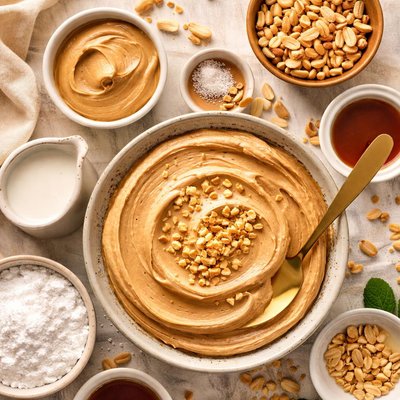
Indulge in the rich, nutty flavor of this Low Sodium Creamy Peanut Butter Icing that’s as smooth as it is satisfying! Crafted with unsalted peanut butter and butter, this recipe is perfect for those looking to reduce sodium without sacrificing decadence. Blended with powdered sugar, a splash of heavy cream, and fragrant vanilla extract, this luscious peanut butter frosting is fluffy, velvety, and surprisingly simple to prepare in just 10 minutes. Ideal for frosting cakes, cupcakes, or cookies, it spreads and pipes beautifully for a polished finish on any bake. Whether you’re aiming for a healthier twist or simply craving the unmistakable creaminess of peanut butter, this icing promises to elevate your desserts with its irresistible texture and flavor.

Smart Nutrition Tracking with SnapCalorie

Explore More



Recipe Information
Ingredients
- 1 cup unsalted creamy peanut butter
- 0.5 cup unsalted butter, softened
- 2 cups powdered sugar
- 0.25 cup heavy cream
- 1 teaspoon vanilla extract
Instructions
In a large mixing bowl, combine the unsalted creamy peanut butter and softened unsalted butter.
Using an electric mixer on medium speed, beat the peanut butter and butter together until the mixture is smooth and creamy.
Gradually add the powdered sugar, about half a cup at a time, beating on low speed after each addition to incorporate the sugar.
Once all the powdered sugar has been added, pour in the heavy cream and vanilla extract.
Increase the mixer speed to medium-high and beat for about 2-3 minutes until the icing is fluffy and smooth.
If the icing is too thick, add a little more heavy cream, a tablespoon at a time, until the desired consistency is achieved.
Frost your favorite cakes, cupcakes, or cookies with the creamy peanut butter icing using a spatula or piping bag.
Nutrition Facts
Calories |
285 | ||
|---|---|---|---|
% Daily Value* |
|||
| Total Fat | 19.4 g | 25% | |
| Saturated Fat | 7.8 g | 39% | |
| Polyunsaturated Fat | 0.0 g | ||
| Cholesterol | 26 mg | 9% | |
| Sodium | 2 mg | 0% | |
| Total Carbohydrate | 24.3 g | 9% | |
| Dietary Fiber | 1.3 g | 4% | |
| Total Sugars | 21.9 g | ||
| Protein | 5.0 g | 10% | |
| Vitamin D | 0.1 mcg | 1% | |
| Calcium | 13 mg | 1% | |
| Iron | 0.4 mg | 2% | |
| Potassium | 128 mg | 3% | |
*The % Daily Value tells you how much a nutrient in a serving of food contributes to a daily diet. 2,000 calories a day is used for general nutrition advice.


