Low Sodium Classic Bacon Bap
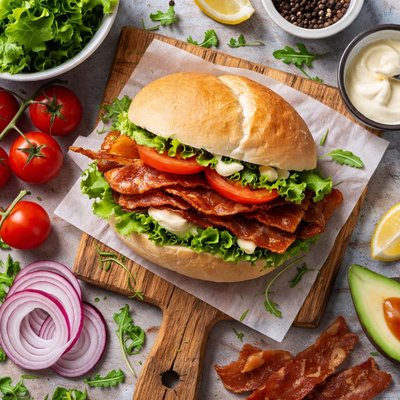
Indulge in the irresistible comfort of a *Low Sodium Classic Bacon Bap*, a healthier twist on a beloved British breakfast staple. This recipe pairs crisp low-sodium bacon with the fluffiness of lightly toasted whole wheat bap rolls, layered with fresh lettuce, juicy tomato slices, and a dollop of tangy low-sodium ketchup. A touch of unsalted butter adds just the right amount of richness, while ground black pepper balances the flavors to perfection. Ready in just 25 minutes, this easy-to-make sandwich is perfect for those seeking a flavorful meal with reduced sodium content. Ideal for breakfast, brunch, or a satisfying snack, this bacon bap is proof that you don't need to sacrifice taste for a heart-healthy option!

Smart Nutrition Tracking with SnapCalorie

Explore More

Recipe Information
Ingredients
- 4 slices Low sodium bacon
- 2 rolls Whole wheat bap rolls
- 1 tablespoon Unsalted butter
- 2 tablespoons Low sodium ketchup
- 2 leaves Fresh lettuce leaves
- 1 sliced Tomato
- 0.25 teaspoon Ground black pepper
Instructions
Preheat a non-stick skillet over medium heat.
Cook the low sodium bacon slices in the skillet for about 7-8 minutes or until crispy, flipping halfway through. Once done, set aside on a paper towel-lined plate to drain any excess fat.
While the bacon is cooking, slice the whole wheat bap rolls in half and lightly toast them in a toaster or under a broiler.
Spread unsalted butter evenly across the cut sides of each bap roll.
Place one fresh lettuce leaf on the bottom half of each buttered bap roll.
Lay the tomato slices over the lettuce and sprinkle with ground black pepper.
Add two crispy low sodium bacon slices on top of the tomato slices in each bap.
Finish with a generous dollop of low sodium ketchup on top of the bacon.
Top with the other half of the bap rolls to form a sandwich.
Serve immediately and enjoy your low sodium classic bacon bap!
Nutrition Facts
Calories |
312 | ||
|---|---|---|---|
% Daily Value* |
|||
| Total Fat | 11.8 g | 15% | |
| Saturated Fat | 5.3 g | 27% | |
| Polyunsaturated Fat | 0.9 g | ||
| Cholesterol | 35 mg | 12% | |
| Sodium | 436 mg | 19% | |
| Total Carbohydrate | 41.4 g | 15% | |
| Dietary Fiber | 4.4 g | 16% | |
| Total Sugars | 7.0 g | ||
| Protein | 10.1 g | 20% | |
| Vitamin D | 0.1 mcg | 1% | |
| Calcium | 31 mg | 2% | |
| Iron | 1.8 mg | 10% | |
| Potassium | 215 mg | 5% | |
*The % Daily Value tells you how much a nutrient in a serving of food contributes to a daily diet. 2,000 calories a day is used for general nutrition advice.


