Low Sodium Classic Ahi Poke Salad
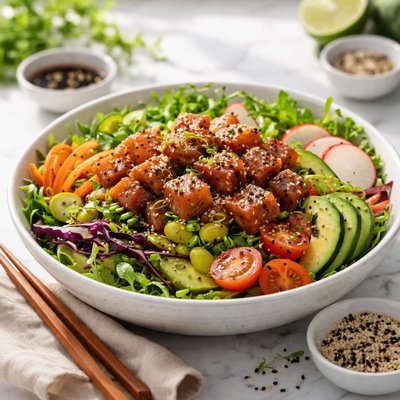
Experience a fresh and vibrant twist on a Hawaiian favorite with this *Low Sodium Classic Ahi Poke Salad*. Perfect for those seeking a flavorful yet heart-healthy option, this recipe combines sushi-grade ahi tuna, creamy avocado, crisp cucumber, and savory seaweed salad, all tossed in a light and aromatic dressing of sesame oil, rice vinegar, lime juice, and low-sodium soy sauce. Enhanced with a sprinkle of sesame seeds and a hint of red pepper flakes for a delicate kick, this protein-packed dish requires just 15 minutes to prepare and is served chilled for an irresistibly refreshing bite. Ideal as an appetizer, light lunch, or quick dinner, this poke salad is a nutrient-rich and flavorful choice that’s as beautiful to serve as it is delicious to eat. Optimize your diet without compromising taste with this easy, no-cook recipe!
The Toxic-Free Cutting Board
Medical-grade titanium. No microplastics. No bacteria. No compromises.
Recipe Information
Ingredients
- 12 ounces Sushi-grade ahi tuna
- 1 tablespoon Sesame oil
- 1 tablespoon Rice vinegar
- 2 teaspoons Low sodium soy sauce
- 1 tablespoon Lime juice
- 2 stalks Green onions
- 0.25 cup White onion
- 0.5 cup Cucumber
- 1 large Avocado
- 0.5 cup Seaweed salad
- 1 teaspoon Sesame seeds
- 0.25 teaspoon Red pepper flakes
Instructions
Start by dicing the sushi-grade ahi tuna into 1/2-inch cubes and place it in a large mixing bowl.
Thinly slice the green onions and finely dice the white onion. Add them to the bowl with the tuna.
Chop the cucumber into small cubes and dice the avocado. Add these to the bowl along with the pre-prepared seaweed salad.
In a small bowl, whisk together sesame oil, rice vinegar, low sodium soy sauce, and lime juice.
Pour the dressing over the tuna mixture and gently toss until all the ingredients are well coated.
Sprinkle sesame seeds and red pepper flakes over the salad.
Serve immediately chilled for the freshest taste, or refrigerate for up to 30 minutes before serving.
Nutrition Facts
Calories |
260 | ||
|---|---|---|---|
% Daily Value* |
|||
| Total Fat | 12.9 g | 17% | |
| Saturated Fat | 2.0 g | 10% | |
| Polyunsaturated Fat | 1.5 g | ||
| Cholesterol | 42 mg | 14% | |
| Sodium | 293 mg | 13% | |
| Total Carbohydrate | 10.9 g | 4% | |
| Dietary Fiber | 4.8 g | 17% | |
| Total Sugars | 3.1 g | ||
| Protein | 27.1 g | 54% | |
| Vitamin D | 0.0 mcg | 0% | |
| Calcium | 40 mg | 3% | |
| Iron | 2.0 mg | 11% | |
| Potassium | 746 mg | 16% | |
*The % Daily Value tells you how much a nutrient in a serving of food contributes to a daily diet. 2,000 calories a day is used for general nutrition advice.



