
Low Fat Unagi Nigiri
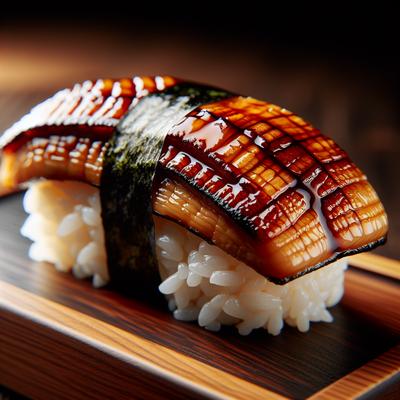
Savor the delicate flavors of Japan with this Low Fat Unagi Nigiri recipe—a lighter twist on the classic seafood favorite. Perfectly seasoned sushi rice is paired with tender, pan-seared freshwater eel, glazed in a luscious yet guilt-free homemade unagi sauce made with low-sodium soy sauce, mirin, and honey. This recipe achieves an authentic taste using smarter ingredient choices without compromising on flavor. Each piece is elegantly finished with optional nori strips and green onion garnish, making it ideal for a healthy sushi night or a special occasion. With just 30 minutes of prep and cook time, this nutritious and satisfying dish brings the art of Japanese cuisine to your table in a simple, approachable way. Perfect for anyone looking for easy low-fat sushi recipes or healthy seafood options!

Log this recipe in SnapCalorie

Recipe Information
Ingredients
- 1 cup Sushi rice
- 1.25 cups Water
- 2 tablespoons Rice vinegar
- 1 teaspoon Sugar
- 0.5 teaspoon Salt
- 1 piece (about 6 ounces) Freshwater eel (unagi), filleted
- 1 tablespoon Low-sodium soy sauce
- 2 teaspoons Mirin (sweet rice wine)
- 1 teaspoon Honey
- 1 tablespoon Green onions, thinly sliced (optional garnish)
- 1 sheet Nori sheets, cut into thin strips (optional)
Instructions
Rinse the sushi rice in cold water until the water runs clear. Combine the rinsed rice and 1.25 cups of water in a rice cooker and cook according to the manufacturer's instructions. Alternatively, cook on the stovetop by bringing the water to a boil, then reduce the heat to low, cover, and simmer for about 18 minutes, or until the water is absorbed. Let the rice rest, covered, for an additional 10 minutes.
While the rice is cooking, mix the rice vinegar, sugar, and salt in a small bowl until dissolved. Gently fold this mixture into the cooked rice once it's cooled slightly. Set aside.
Prepare a low-fat unagi sauce by whisking together the low-sodium soy sauce, mirin, and honey in a small saucepan. Bring the mixture to a gentle simmer over medium heat and allow it to reduce slightly for 2-3 minutes, stirring frequently. The sauce should be slightly thickened but still pourable. Remove from heat.
Preheat a non-stick skillet over medium heat. Lightly spray the skillet with cooking spray. Place the unagi fillet skin-side down and cook for 2-3 minutes until slightly browned. Flip the fillet and cook the other side for an additional 2-3 minutes, or until fully cooked through.
Brush the unagi fillet lightly with the prepared sauce on both sides and remove it from the skillet. Cut the cooked unagi into 8 evenly-sized strips, approximately 1 inch wide.
Wet your hands with water to prevent the rice from sticking and form small, oblong mounds of sushi rice about the size of a thumb (roughly 1 to 1.5 tablespoons of rice each).
Place one strip of unagi over each rice mound. Optionally, you can secure the unagi to the rice by wrapping a thin strip of nori around the center of the nigiri.
Serve the Low Fat Unagi Nigiri garnished with a drizzle of the remaining sauce and thinly sliced green onions, if desired. Enjoy immediately.
Nutrition Facts
Calories |
418 | ||
|---|---|---|---|
% Daily Value* |
|||
| Total Fat | 4.0 g | 5% | |
| Saturated Fat | 0.8 g | 4% | |
| Polyunsaturated Fat | 0.0 g | ||
| Cholesterol | 36 mg | 12% | |
| Sodium | 1737 mg | 76% | |
| Total Carbohydrate | 77.7 g | 28% | |
| Dietary Fiber | 1.3 g | 5% | |
| Total Sugars | 14.4 g | ||
| Protein | 13.7 g | 27% | |
| Vitamin D | 5.6 mcg | 28% | |
| Calcium | 42 mg | 3% | |
| Iron | 2.1 mg | 12% | |
| Potassium | 196 mg | 4% | |
*The % Daily Value tells you how much a nutrient in a serving of food contributes to a daily diet. 2,000 calories a day is used for general nutrition advice.


