Low Fat Sago Pudding
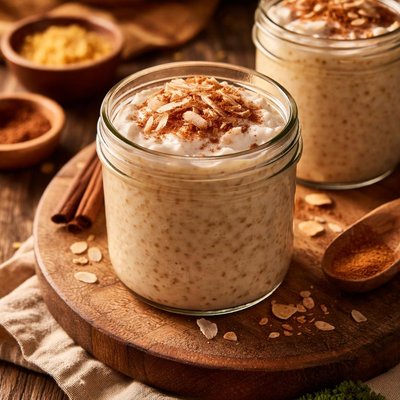
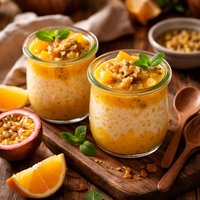
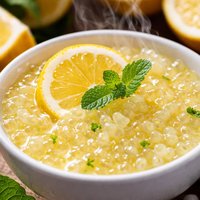
Indulge in the creamy goodness of Low Fat Sago Pudding, a light and delicious dessert that’s perfect for guilt-free indulgence. Made with tender sago pearls simmered in skim milk and water, this pudding achieves a luscious texture while remaining low in fat. Sweetened with just the right amount of sugar and enhanced by the subtle aroma of vanilla, this recipe balances simplicity and flavor beautifully. Top each serving with vibrant slices of fresh fruit—mango, strawberry, or banana—adding a burst of color and natural sweetness. Ready in just 40 minutes from start to finish, this low-fat treat is perfect served warm or chilled for any occasion. Garnish with mint leaves to elevate its presentation and enjoy a dessert that’s as wholesome as it is satisfying!

Smart Nutrition Tracking with SnapCalorie



Recipe Information
Ingredients
- 100 grams Sago pearls
- 500 ml Skim milk
- 200 ml Water
- 50 grams Sugar
- 1 teaspoon Vanilla extract
- 1 pinch Salt
- 100 grams Fresh fruit slices (e.g., mango, strawberry, banana)
- 1 sprig Mint leaves for garnish (optional)
Instructions
Rinse the sago pearls under cold water until the water runs clear to remove any excess starch.
In a medium saucepan over medium heat, combine the sago pearls, skim milk, and water.
Stir the mixture frequently to prevent sticking, and bring it to a gentle simmer.
Cook the sago for about 20-25 minutes until the pearls turn translucent, stirring occasionally.
Add the sugar, vanilla extract, and a pinch of salt. Stir well to combine.
Continue to cook for another 5 minutes, or until the pudding thickens to your desired consistency.
Remove the saucepan from the heat, and let the pudding cool slightly. It will thicken further as it cools.
Serve the sago pudding warm or chilled in individual bowls.
Top each serving with fresh fruit slices.
Garnish with mint leaves if desired before serving.
Nutrition Facts
Calories |
195 | ||
|---|---|---|---|
% Daily Value* |
|||
| Total Fat | 0.2 g | 0% | |
| Saturated Fat | 0.0 g | 0% | |
| Polyunsaturated Fat | 0.0 g | ||
| Cholesterol | 4 mg | 1% | |
| Sodium | 91 mg | 4% | |
| Total Carbohydrate | 43.4 g | 16% | |
| Dietary Fiber | 0.7 g | 3% | |
| Total Sugars | 22.2 g | ||
| Protein | 4.6 g | 9% | |
| Vitamin D | 1.4 mcg | 7% | |
| Calcium | 181 mg | 14% | |
| Iron | 0.5 mg | 3% | |
| Potassium | 270 mg | 6% | |
*The % Daily Value tells you how much a nutrient in a serving of food contributes to a daily diet. 2,000 calories a day is used for general nutrition advice.


