Low Fat Mini Pepperoni Pizza
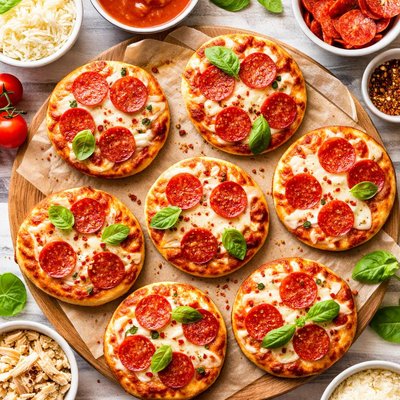
Satisfy your pizza cravings guilt-free with these **Low Fat Mini Pepperoni Pizzas**, a healthier take on everyone’s favorite comfort food. Built on a wholesome base of whole wheat English muffins, these bite-sized pizzas are layered with tangy low-fat marinara sauce, melted reduced-fat mozzarella, and savory turkey pepperoni slices. A sprinkle of dried oregano and basil adds an irresistible Italian-inspired kick, while a light mist of olive oil spray ensures a crisp, golden finish. Ready in under 30 minutes, this quick and easy recipe is perfect for a nutritious snack, a fun family meal, or even a party appetizer. Packed with flavor but lower in fat, these mini pizzas prove that healthy eating doesn’t mean sacrificing taste.

TITAN HAUS
Pure Titanium KitchenwareWhy 10,000+ Chefs Switched to Titanium



Recipe Information
Ingredients
- 4 pieces Whole wheat English muffins
- 1 cup Low-fat marinara sauce
- 1 cup Reduced-fat mozzarella cheese
- 32 pieces Turkey pepperoni slices
- 1 teaspoon Dried oregano
- 1 teaspoon Dried basil
- 1 light coating Olive oil spray
Instructions
Preheat your oven to 400°F (200°C).
Split the English muffins in half and arrange them, cut-side up, on a baking sheet.
Lightly spray each muffin half with olive oil spray, ensuring a even coating.
Spread approximately 2 tablespoons of low-fat marinara sauce over each muffin half.
Sprinkle about 2 tablespoons of reduced-fat mozzarella cheese on top of each sauce-covered muffin half.
Place 4 slices of turkey pepperoni on each mini pizza.
Sprinkle a small amount of dried oregano and dried basil over the top of the pizzas for added flavor.
Bake in the preheated oven for 10 to 15 minutes, or until the cheese is bubbling and golden brown.
Remove the pizzas from the oven and let them cool slightly before serving.
Enjoy your low-fat mini pepperoni pizzas as a nutritious snack or part of a balanced meal.
Nutrition Facts
Calories |
296 | ||
|---|---|---|---|
% Daily Value* |
|||
| Total Fat | 9.5 g | 12% | |
| Saturated Fat | 3.8 g | 19% | |
| Polyunsaturated Fat | 0.0 g | ||
| Cholesterol | 26 mg | 9% | |
| Sodium | 931 mg | 40% | |
| Total Carbohydrate | 34.0 g | 12% | |
| Dietary Fiber | 3.5 g | 12% | |
| Total Sugars | 6.5 g | ||
| Protein | 20.9 g | 42% | |
| Vitamin D | 0.0 mcg | 0% | |
| Calcium | 346 mg | 27% | |
| Iron | 2.5 mg | 14% | |
| Potassium | 250 mg | 5% | |
*The % Daily Value tells you how much a nutrient in a serving of food contributes to a daily diet. 2,000 calories a day is used for general nutrition advice.



