Low Fat Mentaiko Pasta

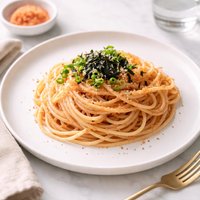
Elevate your weeknight dinners with this irresistible Low Fat Mentaiko Pasta, a healthier take on the classic Japanese-Italian fusion dish! Featuring the bold, umami-packed flavors of mentaiko (spicy cod roe) balanced by creamy, low-fat yogurt, this recipe delivers satisfying richness without the guilt. Light olive oil, soy sauce, and a splash of lemon juice lend depth and brightness, while finely sliced scallions add a fresh, aromatic touch. Ready in just 25 minutes, this quick and easy pasta is perfect for busy days. Serve it steaming hot, topped with optional shredded nori for a hint of ocean-inspired flair. Whether you’re indulging in comfort food or impressing guests, this lighter version of mentaiko pasta is a winner!

Smart Nutrition Tracking with SnapCalorie


Recipe Information
Ingredients
- 200 grams spaghetti
- 2 tablespoons mentaiko (spicy cod roe)
- 3 tablespoons plain low-fat yogurt
- 1 tablespoon light olive oil
- 1 teaspoon soy sauce
- 1 teaspoon lemon juice
- 0.5 teaspoon salt
- 0.25 teaspoon black pepper
- 2 tablespoons scallions (green onions), finely sliced
- 1 tablespoon nori (seaweed), finely shredded (optional garnish)
Instructions
Bring a large pot of salted water to a boil and cook the spaghetti according to the package instructions until al dente.
While the pasta is cooking, prepare the sauce. In a mixing bowl, combine mentaiko, low-fat yogurt, light olive oil, soy sauce, lemon juice, salt, and black pepper. Mix well until smooth and creamy.
Reserve about 1/4 cup of pasta cooking water before draining the pasta.
Drain the spaghetti and immediately return it to the pot.
Add the mentaiko-yogurt sauce to the spaghetti, tossing gently to combine. If the sauce is too thick, gradually add the reserved pasta water until you reach the desired consistency.
Add the sliced scallions and toss again to incorporate.
Serve the pasta hot, garnished with extra scallions and shredded nori, if desired.
Nutrition Facts
Calories |
257 | ||
|---|---|---|---|
% Daily Value* |
|||
| Total Fat | 9.1 g | 12% | |
| Saturated Fat | 1.6 g | 8% | |
| Polyunsaturated Fat | 0.0 g | ||
| Cholesterol | 26 mg | 9% | |
| Sodium | 907 mg | 39% | |
| Total Carbohydrate | 33.8 g | 12% | |
| Dietary Fiber | 2.0 g | 7% | |
| Total Sugars | 2.3 g | ||
| Protein | 9.9 g | 20% | |
| Vitamin D | 1.0 mcg | 5% | |
| Calcium | 60 mg | 5% | |
| Iron | 1.4 mg | 8% | |
| Potassium | 170 mg | 4% | |
*The % Daily Value tells you how much a nutrient in a serving of food contributes to a daily diet. 2,000 calories a day is used for general nutrition advice.


