Low Fat Iced Almond Milk Latte
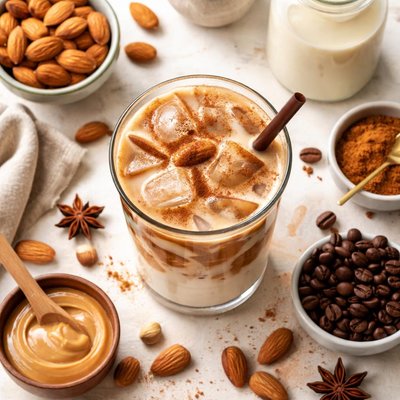
Cool down with this irresistibly refreshing Low Fat Iced Almond Milk Latte—a guilt-free twist on your favorite coffeehouse classic that's ready in just 5 minutes! This easy recipe blends the bold flavor of freshly brewed coffee or espresso with the creamy smoothness of unsweetened almond milk, lightly infused with a hint of vanilla. Chilled over ice, it’s the perfect pick-me-up for warm days, and with only 40 calories per serving (depending on your choice of sweetener), it's perfect for those seeking a low-calorie treat. Whether you enjoy it unsweetened or with a touch of your favorite sugar alternative, this simple yet satisfying drink is a breeze to master. Serve it with a straw for a café-like experience at home!

Smart Nutrition Tracking with SnapCalorie


Recipe Information
Ingredients
- 1 cup Brewed strong coffee or espresso
- 1 cup Unsweetened almond milk
- 1 cup Ice cubes
- 0.5 teaspoon Vanilla extract
- 1 packet Sweetener of choice (optional)
Instructions
Brew a strong cup of coffee using your preferred method. For espresso, use about 2 espresso shots.
Allow the coffee to cool to room temperature. To expedite, place it in the fridge for a few minutes.
Fill a tall glass with 1 cup of ice cubes.
Pour the chilled coffee or espresso over the ice.
In a separate container, combine 1 cup of unsweetened almond milk and 1/2 teaspoon of vanilla extract. Stir well.
If you prefer a sweeter drink, add 1 packet of sweetener to the almond milk and stir until dissolved.
Slowly pour the vanilla almond milk mixture over the coffee in the glass, allowing it to mix as you pour.
Stir your latte gently to combine all the ingredients thoroughly.
Serve immediately with a straw and enjoy your refreshing low-fat iced almond milk latte.
Nutrition Facts
Calories |
69 | ||
|---|---|---|---|
% Daily Value* |
|||
| Total Fat | 2.2 g | 3% | |
| Saturated Fat | 0.0 g | 0% | |
| Polyunsaturated Fat | 0.0 g | ||
| Cholesterol | 0 mg | 0% | |
| Sodium | 210 mg | 9% | |
| Total Carbohydrate | 8.7 g | 3% | |
| Dietary Fiber | 0.7 g | 3% | |
| Total Sugars | 4.3 g | ||
| Protein | 3.6 g | 7% | |
| Vitamin D | 2.5 mcg | 13% | |
| Calcium | 466 mg | 36% | |
| Iron | 0.7 mg | 4% | |
| Potassium | 437 mg | 9% | |
*The % Daily Value tells you how much a nutrient in a serving of food contributes to a daily diet. 2,000 calories a day is used for general nutrition advice.


