Low Fat Hong Kong Milk Tea
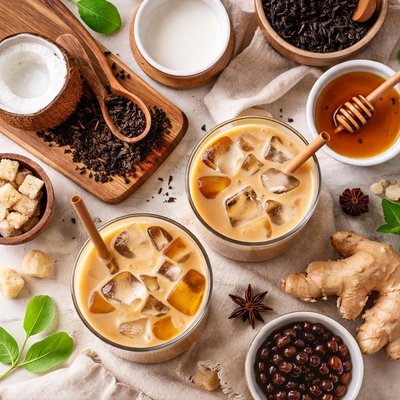
Savor the iconic flavors of Hong Kong with a healthier twist in this Low Fat Hong Kong Milk Tea recipe! Offering the same velvety texture and rich, robust taste as the traditional version, this recipe swaps in evaporated low-fat milk for a lighter touch. Black tea leaves are steeped to perfection, creating a strong, aromatic base that blends seamlessly with creamy milk and just the right hint of sweetness. Ready in only 20 minutes, this guilt-free indulgence is perfect for tea lovers looking for a comforting, cafe-style drink at home. Enjoy it piping hot for the ultimate low-fat treat! Keywords: low fat Hong Kong milk tea, healthy milk tea recipe, homemade milk tea, low-calorie tea recipes.

Smart Nutrition Tracking with SnapCalorie

Recipe Information
Ingredients
- 4 tablespoons black tea leaves
- 2 cups water
- 1 cup evaporated low-fat milk
- 2 tablespoons sugar
Instructions
Begin by boiling 2 cups of water in a medium-sized saucepan.
Once the water is boiling, add 4 tablespoons of black tea leaves to the saucepan.
Allow the tea to steep for about 8 minutes to extract a strong flavor. Adjust the steeping time if a lighter or stronger tea is preferred.
Strain the tea into a teapot or another saucepan using a fine mesh strainer to separate the tea leaves from the liquid.
Add 1 cup of evaporated low-fat milk to the strained tea. Stir gently to combine.
Return the tea to low heat and slowly warm the mixture without letting it come to a boil.
Add 2 tablespoons of sugar into the tea and stir until the sugar is completely dissolved. Adjust sugar to taste if necessary.
Once the sugar is dissolved, remove the tea from the heat.
Pour the low-fat Hong Kong Milk Tea into cups and serve immediately, enjoying it hot.
Nutrition Facts
Calories |
126 | ||
|---|---|---|---|
% Daily Value* |
|||
| Total Fat | 1.9 g | 2% | |
| Saturated Fat | 1.1 g | 6% | |
| Polyunsaturated Fat | 0.0 g | ||
| Cholesterol | 8 mg | 3% | |
| Sodium | 64 mg | 3% | |
| Total Carbohydrate | 23.1 g | 8% | |
| Dietary Fiber | 0.0 g | 0% | |
| Total Sugars | 22.3 g | ||
| Protein | 4.9 g | 10% | |
| Vitamin D | 1.2 mcg | 6% | |
| Calcium | 209 mg | 16% | |
| Iron | 0.0 mg | 0% | |
| Potassium | 274 mg | 6% | |
*The % Daily Value tells you how much a nutrient in a serving of food contributes to a daily diet. 2,000 calories a day is used for general nutrition advice.


