Low Fat Fresh Tomato and Cheese Salad
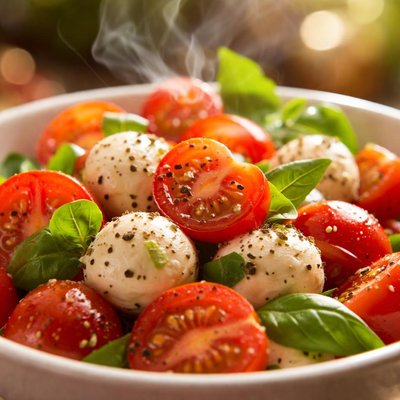
Bright, refreshing, and effortlessly healthy, this Low Fat Fresh Tomato and Cheese Salad is a perfect blend of simplicity and flavor. Vibrant slices of ripe tomatoes pair beautifully with creamy low-fat mozzarella, while torn basil leaves add a fragrant burst of freshness. Drizzled with a light, tangy dressing of extra virgin olive oil and balsamic vinegar, this salad is seasoned to perfection with just a touch of salt and cracked black pepper. Ready in just 15 minutes and requiring no cooking, this ultimate summer salad is an excellent low-fat, gluten-free option for a quick lunch, a side dish to grilled meats, or even a light appetizer. It’s a celebration of wholesome, fresh ingredients that will leave both your palate and your waistline happy!

Smart Nutrition Tracking with SnapCalorie

Explore More
Recipe Information
Ingredients
- 4 medium ripe tomatoes
- 200 grams low-fat mozzarella cheese
- 10 leaves fresh basil leaves
- 2 tablespoons extra virgin olive oil
- 1 tablespoon balsamic vinegar
- 0.5 teaspoon salt
- 0.25 teaspoon black pepper
Instructions
Wash the ripe tomatoes under running water and pat them dry with a paper towel.
Slice the tomatoes into 1/4-inch thick slices and arrange them on a large serving platter.
Drain the low-fat mozzarella cheese and cut it into thin slices or small bite-sized pieces. Arrange them on the platter, interspersed with the tomato slices.
Scatter the fresh basil leaves over the tomatoes and cheese. Tear the leaves with your hands for more flavor release.
In a small mixing bowl, prepare the dressing by whisking together the extra virgin olive oil, balsamic vinegar, salt, and black pepper until well combined.
Drizzle the dressing evenly over the salad.
Let the salad sit for about 5 minutes to allow the flavors to meld together before serving.
Serve immediately as a standalone salad or as a side dish.
Nutrition Facts
Calories |
196 | ||
|---|---|---|---|
% Daily Value* |
|||
| Total Fat | 13.3 g | 17% | |
| Saturated Fat | 5.2 g | 26% | |
| Polyunsaturated Fat | 0.0 g | ||
| Cholesterol | 25 mg | 8% | |
| Sodium | 565 mg | 25% | |
| Total Carbohydrate | 4.7 g | 2% | |
| Dietary Fiber | 1.3 g | 5% | |
| Total Sugars | 3.3 g | ||
| Protein | 14.3 g | 29% | |
| Vitamin D | 0.0 mcg | 0% | |
| Calcium | 264 mg | 20% | |
| Iron | 0.5 mg | 3% | |
| Potassium | 248 mg | 5% | |
*The % Daily Value tells you how much a nutrient in a serving of food contributes to a daily diet. 2,000 calories a day is used for general nutrition advice.


