Low Fat Creamy Yogurt Ice Cream
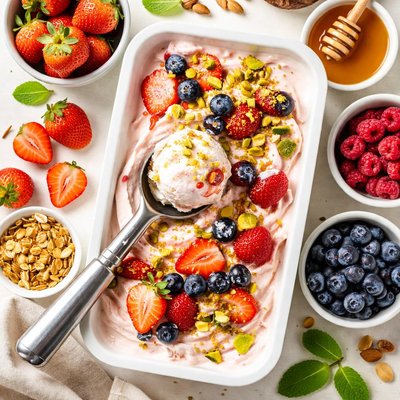
Indulge in a guilt-free frozen treat with this *Low Fat Creamy Yogurt Ice Cream*, a perfect blend of wholesome ingredients and irresistible flavor. Made with protein-rich low-fat Greek yogurt, a hint of natural sweetness from honey, and the bright notes of vanilla and lemon juice, this recipe churns up a creamy dessert that's as nutritious as it is delicious. Lightened further with skim milk, this quick and easy recipe requires just 15 minutes of prep before your ice cream maker does the rest. Serve it with a handful of fresh berries for an extra pop of color and flavor, making it the ultimate refreshing summer dessert. Whether you're health-conscious or simply a fan of tangy, creamy treats, this low-fat homemade ice cream is sure to become your go-to recipe!

Smart Nutrition Tracking with SnapCalorie


Recipe Information
Ingredients
- 500 grams Low-fat plain Greek yogurt
- 60 milliliters Honey
- 1 teaspoon Vanilla extract
- 1 tablespoon Lemon juice
- 120 milliliters Skim milk
- 100 grams Fresh berries (optional, for serving)
Instructions
In a large mixing bowl, combine the low-fat Greek yogurt, honey, vanilla extract, and lemon juice.
Mix the ingredients thoroughly until the honey is completely integrated and the mixture is smooth.
Gradually add the skim milk to the yogurt mixture, stirring continuously to ensure a consistent and creamy texture.
Once the mixture is well combined, pour it into an ice cream maker and churn according to the manufacturer's instructions. This usually takes about 20-25 minutes.
After the churning is complete, transfer the yogurt ice cream to an airtight container.
Place the container in the freezer for an additional 1-2 hours for a firmer texture.
To serve, scoop the ice cream into bowls and top with fresh berries, if desired.
Enjoy your creamy and refreshing low-fat yogurt ice cream!
Nutrition Facts
Calories |
178 | ||
|---|---|---|---|
% Daily Value* |
|||
| Total Fat | 2.5 g | 3% | |
| Saturated Fat | 1.6 g | 8% | |
| Polyunsaturated Fat | 0.0 g | ||
| Cholesterol | 14 mg | 5% | |
| Sodium | 56 mg | 2% | |
| Total Carbohydrate | 25.8 g | 9% | |
| Dietary Fiber | 0.8 g | 3% | |
| Total Sugars | 24.0 g | ||
| Protein | 13.7 g | 27% | |
| Vitamin D | 0.3 mcg | 2% | |
| Calcium | 190 mg | 15% | |
| Iron | 0.2 mg | 1% | |
| Potassium | 280 mg | 6% | |
*The % Daily Value tells you how much a nutrient in a serving of food contributes to a daily diet. 2,000 calories a day is used for general nutrition advice.


