
Low Fat Classic Sourdough Bread
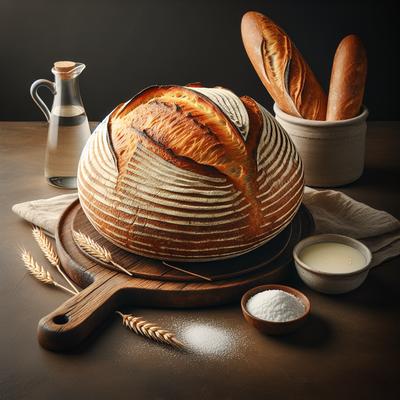
Discover the art of artisan bread-making with this delightful **Low Fat Classic Sourdough Bread** recipe, a lighter twist on the traditional sourdough loaf. Made with just four simple ingredients—active sourdough starter, unbleached all-purpose flour, warm water, and a touch of salt—it’s a wholesome, low-fat option that doesn’t compromise on flavor. Featuring the timeless techniques of autolyse and stretch-and-fold kneading, this recipe creates a beautifully airy crumb and a chewy, golden crust. Perfect for beginners and seasoned bakers alike, this sourdough is baked to perfection in a Dutch oven for bakery-level results at home. Whether paired with your favorite spreads or served alongside hearty soups, this homemade sourdough will become your go-to bread for any occasion.

Log this recipe in SnapCalorie

Recipe Information
Ingredients
- 100 grams Active sourdough starter
- 350 milliliters Warm water
- 500 grams Unbleached all-purpose flour
- 10 grams Salt
Instructions
In a large mixing bowl, combine 100 grams of active sourdough starter with 350 milliliters of warm water. Stir until the starter is fully dissolved in the water.
Add 500 grams of unbleached all-purpose flour to the bowl. Mix with a spatula or your hands until no dry flour remains and a shaggy dough forms.
Cover the bowl with a damp towel or plastic wrap and let it rest for 30 minutes. This resting period is called autolyse, and it helps the flour absorb water and begin gluten development.
After 30 minutes, sprinkle 10 grams of salt over the dough surface. Wet your hands slightly to prevent sticking and knead the salt into the dough. Use a stretching and folding technique by pulling the dough from the sides and folding it over itself a few times.
Cover the bowl again and let the dough rise at room temperature for about 4 to 5 hours. During this time, perform 3 to 4 sets of stretch and fold every 30 minutes for the first 2 hours. This helps develop structure in the dough.
Once the dough has increased by about 50% in volume and has become smooth and elastic, lightly flour a work surface and transfer the dough onto it.
Shape the dough into a tight ball by folding it onto itself. Pinch any seams together on the bottom to create tension on the surface.
Place the shaped dough seam side up in a floured proofing basket or bowl lined with a floured kitchen towel. Cover and let rise for 1 to 2 hours, until it slightly puffs up.
Preheat your oven to 230°C (450°F) with a Dutch oven inside for at least 30 minutes to ensure it's adequately hot.
Carefully remove the preheated Dutch oven from the oven and place the dough inside it, seam side down. Score the top with a sharp knife or bread lame.
Cover the Dutch oven with its lid and bake for 20 minutes. Then remove the lid and bake for an additional 20 minutes, until the bread develops a deep golden-brown crust.
Once baked, remove the bread from the Dutch oven and let it cool completely on a wire rack before slicing. This cooling step is necessary to set the crumb structure of the bread.
Nutrition Facts
Calories |
1870 | ||
|---|---|---|---|
% Daily Value* |
|||
| Total Fat | 5.4 g | 7% | |
| Saturated Fat | 0.8 g | 4% | |
| Polyunsaturated Fat | 0.0 g | ||
| Cholesterol | 0 mg | 0% | |
| Sodium | 3944 mg | 171% | |
| Total Carbohydrate | 391.5 g | 142% | |
| Dietary Fiber | 14.5 g | 52% | |
| Total Sugars | 1.4 g | ||
| Protein | 52.6 g | 105% | |
| Vitamin D | 0.0 mcg | 0% | |
| Calcium | 80 mg | 6% | |
| Iron | 6.3 mg | 35% | |
| Potassium | 555 mg | 12% | |
*The % Daily Value tells you how much a nutrient in a serving of food contributes to a daily diet. 2,000 calories a day is used for general nutrition advice.


