Low Fat Classic Liverwurst Sandwich
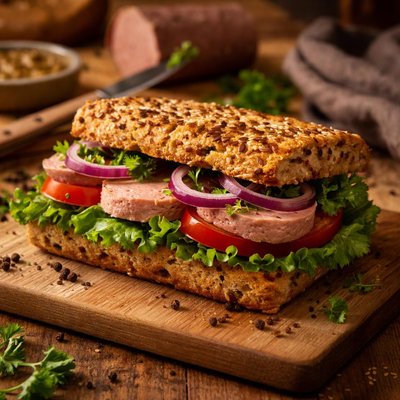
Indulge in the irresistible charm of a Low Fat Classic Liverwurst Sandwich, a lighter twist on a timeless deli favorite. This quick, 10-minute recipe combines creamy low-fat liverwurst with the robust tang of a Dijon mustard and light mayonnaise spread, all layered between hearty whole grain bread slices. Fresh lettuce, juicy tomato slices, crisp onion rings, and tangy pickles provide a refreshing crunch, while a hint of black pepper ties the flavors together perfectly. Ideal for a lunch that's as satisfying as it is healthy, this sandwich retains all the bold character of the traditional liverwurst while keeping the fat content in check. Whether you’re looking for a nutritious option or simply a flavorful bite, this recipe delivers on all fronts!

Smart Nutrition Tracking with SnapCalorie

Explore More
Recipe Information
Ingredients
- 4 ounces low-fat liverwurst
- 4 slices whole grain bread
- 2 tablespoons light mayonnaise
- 1 tablespoon Dijon mustard
- 4 leaves leafy lettuce
- 4 slices pickles
- 1 small tomato
- 0.25 small onion
- 0.25 teaspoon black pepper
Instructions
Start by slicing the tomato and onion into thin rings and set them aside.
In a small bowl, mix together the light mayonnaise and Dijon mustard until well combined.
Lay out the whole grain bread slices on a cutting board. Spread the mayo-mustard mixture evenly over one side of each slice.
Slice the low-fat liverwurst into thin, even slices.
Place two slices of lettuce on two of the bread slices, on top of the mayo-mustard spread.
Layer the liverwurst slices evenly on top of the lettuce.
Add the tomato slices, onion rings, and pickle slices on top of the liverwurst.
Sprinkle black pepper over the vegetables for added flavor.
Top the sandwiches with the remaining bread slices, mayo-mustard side down.
Press down gently on the sandwiches, cut them in half if desired, and serve immediately.
Nutrition Facts
Calories |
332 | ||
|---|---|---|---|
% Daily Value* |
|||
| Total Fat | 12.3 g | 16% | |
| Saturated Fat | 2.6 g | 13% | |
| Polyunsaturated Fat | 3.3 g | ||
| Cholesterol | 63 mg | 21% | |
| Sodium | 1111 mg | 48% | |
| Total Carbohydrate | 33.4 g | 12% | |
| Dietary Fiber | 5.7 g | 20% | |
| Total Sugars | 7.0 g | ||
| Protein | 21.3 g | 43% | |
| Vitamin D | 0.0 mcg | 0% | |
| Calcium | 91 mg | 7% | |
| Iron | 4.4 mg | 24% | |
| Potassium | 475 mg | 10% | |
*The % Daily Value tells you how much a nutrient in a serving of food contributes to a daily diet. 2,000 calories a day is used for general nutrition advice.


