Low Fat Brazilian Farofa
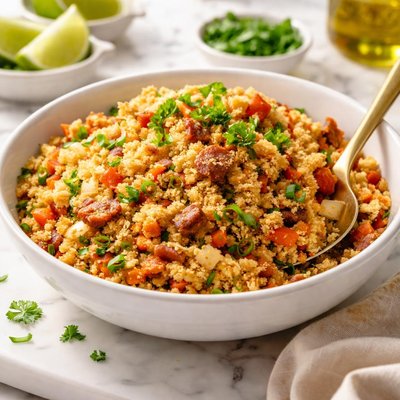
Discover the vibrant flavors of Brazil with this Low Fat Brazilian Farofa, a lighter twist on the beloved traditional dish. Crafted with toasted cassava flour, aromatic garlic and onion, and a splash of low-sodium broth, this farofa embodies the perfect balance of savory and satisfying. Fresh parsley adds a burst of freshness, while minimal olive oil keeps the dish heart-healthy without sacrificing richness. Ready in just 30 minutes, this gluten-free and low-fat recipe is the ultimate side dish for pairing with grilled meats, stews, or a crisp salad. Elevate your meals with this nutritious and flavorful Brazilian classic!

Smart Nutrition Tracking with SnapCalorie



Recipe Information
Ingredients
- 200 grams cassava flour
- 1 medium onion, finely chopped
- 2 cloves garlic, minced
- 240 milliliters low-sodium chicken or vegetable broth
- 1 tablespoon olive oil
- 0.5 teaspoon salt
- 0.25 teaspoon black pepper
- 2 tablespoons fresh parsley, chopped
Instructions
Heat the olive oil in a large non-stick skillet over medium heat.
Add the chopped onion and cook for 5-7 minutes until it becomes translucent, stirring occasionally.
Stir in the minced garlic and cook for an additional 1-2 minutes until fragrant.
Pour in the broth and bring to a gentle simmer. Reduce the heat slightly and let it simmer for about 3 minutes.
Gradually add the cassava flour, stirring constantly to prevent clumping. Cook while stirring until the mixture thickens and starts to dry out, about 5-7 minutes.
Season the farofa with salt and black pepper to taste, stirring well to evenly distribute the seasoning.
Once the cassava flour is toasted and golden, remove the skillet from the heat.
Stir in the freshly chopped parsley, and adjust the seasoning if necessary.
Serve the farofa warm as a side dish accompanying grilled meats, stews, or a hearty salad.
Nutrition Facts
Calories |
145 | ||
|---|---|---|---|
% Daily Value* |
|||
| Total Fat | 2.5 g | 3% | |
| Saturated Fat | 0.4 g | 2% | |
| Polyunsaturated Fat | 0.0 g | ||
| Cholesterol | 0 mg | 0% | |
| Sodium | 192 mg | 8% | |
| Total Carbohydrate | 28.5 g | 10% | |
| Dietary Fiber | 1.7 g | 6% | |
| Total Sugars | 2.0 g | ||
| Protein | 1.0 g | 2% | |
| Vitamin D | 0.0 mcg | 0% | |
| Calcium | 21 mg | 2% | |
| Iron | 0.4 mg | 2% | |
| Potassium | 50 mg | 1% | |
*The % Daily Value tells you how much a nutrient in a serving of food contributes to a daily diet. 2,000 calories a day is used for general nutrition advice.


