Low Fat Banana Split Ice Cream
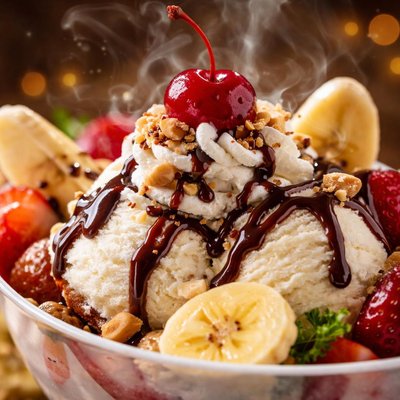
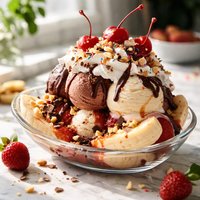
Indulge in guilt-free decadence with this irresistible Low Fat Banana Split Ice Cream! A creative twist on the classic dessert, this recipe blends frozen bananas, creamy low-fat Greek yogurt, and a hint of honey for natural sweetness, making it both rich and refreshing. Perfect for summer or anytime you crave a lightened-up treat, it features vibrant toppings like juicy pineapple chunks, ripe strawberries, and a drizzle of low-fat chocolate syrup. Garnished with whipped cream, crunchy chopped nuts, and bright maraschino cherries, every spoonful is a delightful combination of flavor and texture. With just 15 minutes of prep time and no cooking required, this healthy yet indulgent dessert is ideal for a quick family treat or casual entertaining.

Smart Nutrition Tracking with SnapCalorie


Recipe Information
Ingredients
- 4 large Bananas
- 2 cups Low-fat Greek yogurt
- 2 tablespoons Honey
- 1 teaspoon Vanilla extract
- 0.5 cup Low-fat milk
- 1 cup Pineapple chunks
- 1 cup Chopped strawberries
- 0.5 cup Low-fat chocolate syrup
- 0.5 cup Chopped nuts
- 1 cup Low-fat whipped cream
- 8 Maraschino cherries
Instructions
Peel the bananas and slice them into thin rounds. Place them in a single layer on a baking sheet lined with parchment paper. Freeze for at least 3 hours or until completely frozen.
In a food processor, combine the frozen banana slices, low-fat Greek yogurt, honey, vanilla extract, and low-fat milk. Blend until smooth and creamy, scraping down the sides as needed.
Transfer the banana ice cream mixture into an airtight container and freeze for an additional hour to firm up slightly if needed.
Scoop the banana ice cream into bowls.
Top each serving with pineapple chunks, chopped strawberries, a drizzle of low-fat chocolate syrup, and chopped nuts.
Finish with a dollop of low-fat whipped cream and a maraschino cherry on top.
Serve immediately and enjoy this refreshing low-fat treat!
Nutrition Facts
Calories |
625 | ||
|---|---|---|---|
% Daily Value* |
|||
| Total Fat | 16.6 g | 21% | |
| Saturated Fat | 5.2 g | 26% | |
| Polyunsaturated Fat | 0.0 g | ||
| Cholesterol | 17 mg | 6% | |
| Sodium | 166 mg | 7% | |
| Total Carbohydrate | 107.0 g | 39% | |
| Dietary Fiber | 9.3 g | 33% | |
| Total Sugars | 80.0 g | ||
| Protein | 18.7 g | 37% | |
| Vitamin D | 1.4 mcg | 7% | |
| Calcium | 219 mg | 17% | |
| Iron | 2.1 mg | 12% | |
| Potassium | 1026 mg | 22% | |
*The % Daily Value tells you how much a nutrient in a serving of food contributes to a daily diet. 2,000 calories a day is used for general nutrition advice.


