Low Carb Suji Halwa
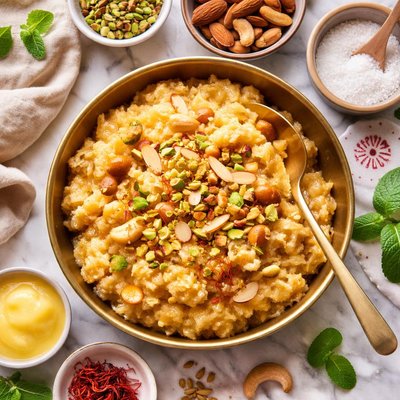
Satisfy your sweet tooth guilt-free with this Low Carb Suji Halwa recipe, a delicious twist on the traditional Indian dessert. Made with almond flour instead of semolina, this keto-friendly treat is rich, aromatic, and packed with flavors of ghee, cardamom, and saffron. The subtle sweetness from erythritol perfectly complements the nutty tones of roasted almond flour, while a garnish of sliced almonds and pistachios adds a delightful crunch. Ready in just 20 minutes, this low-carb halwa is perfect for celebrations, an after-meal indulgence, or even as a warm comforting dessert on chilly evenings. Whether you’re on a keto diet or simply looking to enjoy a classic dessert without the carbs, this recipe promises the same familiar richness with a healthy makeover.

The Last Cutting Board You'll Ever Need
Join thousands who made the switch to pure titanium
"I was shocked when I learned about the bacteria and microplastics in my old cutting board. Switching to Titan Haus was the best decision—I'll never go back!"
Recipe Information
Ingredients
- 1 cup Almond flour
- 3 tablespoons Ghee (clarified butter)
- 3 tablespoons Erythritol or Low-Carb Sweetener (granulated)
- 1.5 cups Water
- 0.5 teaspoons Cardamom powder
- 2 tablespoons Sliced almonds
- 1 tablespoons Chopped pistachios
- 5 strands Saffron strands
Instructions
Heat the ghee in a non-stick pan over medium heat.
Add the almond flour to the pan and roast it gently, stirring continuously, for about 5–7 minutes or until it turns light golden brown and gives off a nutty aroma.
In a separate saucepan, heat the water and dissolve erythritol (or your preferred low-carb sweetener) in it. Add the saffron strands and let them steep for 1–2 minutes.
Slowly pour the sweetened saffron water into the roasted almond flour mixture, stirring continuously to avoid lumps.
Reduce the heat to low and cook the halwa mixture for 5–7 minutes, stirring constantly, until it thickens and starts to leave the sides of the pan.
Add the cardamom powder and mix well.
Garnish the halwa with sliced almonds and chopped pistachios. Serve warm and enjoy your low-carb Suji Halwa!
Nutrition Facts
Calories |
285 | ||
|---|---|---|---|
% Daily Value* |
|||
| Total Fat | 27.5 g | 35% | |
| Saturated Fat | 7.9 g | 40% | |
| Polyunsaturated Fat | 0.0 g | ||
| Cholesterol | 25 mg | 8% | |
| Sodium | 4 mg | 0% | |
| Total Carbohydrate | 16.5 g | 6% | |
| Dietary Fiber | 3.9 g | 14% | |
| Total Sugars | 1.3 g | ||
| Protein | 7.2 g | 14% | |
| Vitamin D | 0.0 mcg | 0% | |
| Calcium | 85 mg | 7% | |
| Iron | 1.3 mg | 7% | |
| Potassium | 254 mg | 5% | |
*The % Daily Value tells you how much a nutrient in a serving of food contributes to a daily diet. 2,000 calories a day is used for general nutrition advice.



