
Low Carb Honey Mustard Chicken
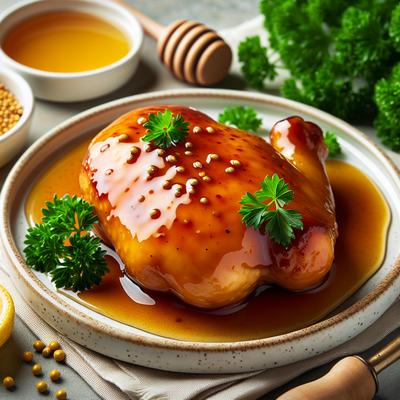
Savor the irresistible flavors of **Low Carb Honey Mustard Chicken**, a healthier twist on a classic favorite that's perfect for keto and low-carb diets! This easy-to-make recipe features tender, juicy chicken breasts smothered in a tangy, sweet, and savory sauce made with Dijon mustard, a sugar-free honey substitute, and a hint of apple cider vinegar for a delightful depth of flavor. Seasoned with garlic powder, paprika, salt, and black pepper, and baked to golden perfection, this dish is ready in under 40 minutes, making it a convenient option for busy weeknights. Garnish with fresh parsley for a pop of color and freshness, and pair it with your favorite low-carb sides for a wholesome, satisfying meal.

Log this recipe in SnapCalorie

Recipe Information
Ingredients
- 4 pieces boneless, skinless chicken breasts
- 3 tablespoons Dijon mustard
- 2 tablespoons sugar-free honey substitute
- 2 tablespoons olive oil
- 1 tablespoon apple cider vinegar
- 1 teaspoon garlic powder
- 1 teaspoon paprika
- 0.5 teaspoon salt
- 0.5 teaspoon black pepper
- 2 tablespoons fresh parsley (optional, for garnish)
Instructions
Preheat your oven to 375°F (190°C).
In a small mixing bowl, combine the Dijon mustard, sugar-free honey substitute, olive oil, apple cider vinegar, garlic powder, paprika, salt, and black pepper. Whisk until well blended.
Place the chicken breasts in a baking dish, ensuring they're evenly spaced.
Pour the honey mustard mixture over the chicken breasts, making sure each piece is thoroughly coated.
Cover the baking dish with aluminum foil and bake in the preheated oven for 15 minutes.
Remove the foil and continue baking for an additional 10 minutes, or until the chicken reaches an internal temperature of 165°F (74°C) and is golden brown on top.
Remove from the oven and let the chicken rest for 5 minutes before serving.
Garnish with fresh parsley if desired before serving.
Nutrition Facts
Calories |
1528 | ||
|---|---|---|---|
% Daily Value* |
|||
| Total Fat | 62.4 g | 80% | |
| Saturated Fat | 11.4 g | 57% | |
| Polyunsaturated Fat | 2.7 g | ||
| Cholesterol | 592 mg | 197% | |
| Sodium | 2751 mg | 120% | |
| Total Carbohydrate | 11.9 g | 4% | |
| Dietary Fiber | 1.4 g | 5% | |
| Total Sugars | 0.4 g | ||
| Protein | 216.7 g | 433% | |
| Vitamin D | 0.2 mcg | 1% | |
| Calcium | 96 mg | 7% | |
| Iron | 7.5 mg | 42% | |
| Potassium | 1890 mg | 40% | |
*The % Daily Value tells you how much a nutrient in a serving of food contributes to a daily diet. 2,000 calories a day is used for general nutrition advice.


