Korean Sauerkraut Kimchi

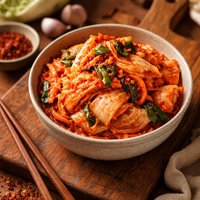
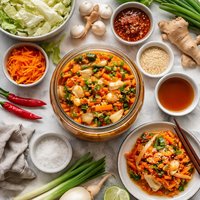
Discover the bold, tangy flavors of homemade *Korean Sauerkraut Kimchi*, a vibrant fusion of traditional Korean and fermented sauerkraut techniques. This probiotic-rich recipe begins with Napa cabbage, carrots, daikon radish, and green onions, all infused with the signature heat of gochugaru (Korean red pepper flakes), aromatic garlic, and ginger. A brine of sea salt and filtered water softens the cabbage, while a flavorful paste of fish sauce and a hint of sugar adds depth and balance. Carefully fermented for 3-7 days, this kimchi develops a complex umami richness with a satisfyingly spicy kick. Perfect as a zesty side dish, topping, or ingredient in soups and stir-fries, this recipe is a must-try for anyone craving authentic, homemade Korean flavors.

Smart Nutrition Tracking with SnapCalorie

Explore More

Recipe Information
Ingredients
- 1 large head Napa cabbage
- 2 medium Carrots
- 1 small Daikon radish
- 4 stalks Green onions
- 3 tablespoons Sea salt
- 5 cloves Garlic
- 1 inch piece Ginger
- 3 tablespoons Korean red pepper flakes (gochugaru)
- 3 tablespoons Fish sauce
- 1 teaspoon Sugar
- 4 cups Filtered water
Instructions
Remove any damaged outer leaves from the Napa cabbage and cut it lengthwise into quarters.
Cut the quarters into 2-inch pieces and place them into a large bowl.
Dissolve 3 tablespoons of sea salt in 4 cups of filtered water, then pour the brine over the cabbage. Mix well to ensure all the leaves are coated.
Cover the bowl and let the cabbage soak for 2 hours, turning it occasionally to ensure even brining.
While the cabbage brines, julienne the carrots and daikon radish and slice the green onions into 2-inch pieces. Set aside.
Peel and finely mince the garlic and ginger, then combine them in a small bowl with the gochugaru, fish sauce, and sugar to form a thick paste.
After 2 hours, drain the cabbage and rinse it thoroughly under cold water to remove excess salt. Let it drain in a colander for 10-15 minutes.
In a large mixing bowl, combine the drained cabbage with the julienned carrots, daikon radish, and green onions.
Add the garlic-ginger paste to the vegetables and use your hands (wear gloves if needed) to thoroughly massage the paste into the mix until evenly coated.
Pack the kimchi tightly into a clean jar or fermentation crock, leaving about 1 inch of headspace at the top. Press down to remove any air pockets.
Seal the jar loosely (to allow gases to escape during fermentation) and place it in a cool, dark area for 3-7 days, depending on your desired level of fermentation.
Check the kimchi daily to release any built-up gas and press the vegetables down if needed to keep them submerged in the liquid.
Once fermented to your liking, transfer the kimchi to the refrigerator to slow the fermentation process. It will keep for several weeks.
Nutrition Facts
Calories |
39 | ||
|---|---|---|---|
% Daily Value* |
|||
| Total Fat | 1.1 g | 1% | |
| Saturated Fat | 0.2 g | 1% | |
| Polyunsaturated Fat | 0.2 g | ||
| Cholesterol | 0 mg | 0% | |
| Sodium | 1822 mg | 79% | |
| Total Carbohydrate | 6.8 g | 2% | |
| Dietary Fiber | 2.5 g | 9% | |
| Total Sugars | 3.4 g | ||
| Protein | 2.0 g | 4% | |
| Vitamin D | 0.0 mcg | 0% | |
| Calcium | 65 mg | 5% | |
| Iron | 0.7 mg | 4% | |
| Potassium | 247 mg | 5% | |
*The % Daily Value tells you how much a nutrient in a serving of food contributes to a daily diet. 2,000 calories a day is used for general nutrition advice.


