Keto Tonkotsu Ramen
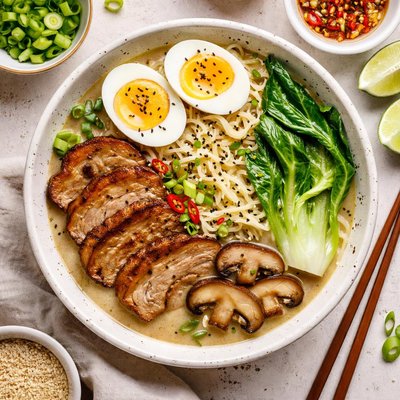
Indulge in the rich, creamy decadence of Keto Tonkotsu Ramen, a flavorful low-carb twist on the classic Japanese noodle soup. This recipe features a deeply savory pork bone broth, simmered for hours with garlic, ginger, and kombu to achieve its signature silky texture, while unflavored collagen powder enhances both the health benefits and thickness. Tender slices of seared pork belly, marinated soft-boiled eggs, and low-carb shirataki noodles come together to form a satisfying bowl that's as authentic as it is keto-friendly. Topped with nori, green onions, and a touch of sesame oil, this hearty dish offers all the comfort of traditional ramen without the carbs, perfect for anyone craving bold, umami-packed flavors on a keto diet.

Smart Nutrition Tracking with SnapCalorie

Recipe Information
Ingredients
- 1 pound Boneless pork belly
- 3 pounds Pork bones (neck or femur)
- 6 Garlic cloves
- 2 inches Ginger
- 6 Green onions
- 0.5 cup Soy sauce (or tamari for gluten-free)
- 2 tablespoons White miso paste
- 2 scoops Unflavored collagen powder
- 1 tablespoon Coconut aminos
- 1 tablespoon Avocado oil
- 2 packs Low-carb shirataki noodles (konjac noodles)
- 2 Eggs
- 1 teaspoon Sesame oil
- 1 sheet Kombu (dried kelp)
- 0.5 teaspoon Salt
- 0.25 teaspoon Ground black pepper
- 2 Nori (seaweed sheets)
Instructions
Start by preparing the pork belly. Roll the pork belly into a tight cylinder and secure it with kitchen twine. Sear the pork belly in a hot pan with avocado oil until golden brown on all sides. Set it aside.
In a large stockpot, combine the pork bones, seared pork belly, garlic, ginger, and green onions. Cover with water and bring to a boil. Skim off any foam impurities that rise to the surface.
Lower the heat to a simmer and add kombu. Simmer the broth for 6-8 hours, partially uncovered, to extract all the flavor from the pork bones and develop a creamy texture. Skim occasionally if needed.
While the broth simmers, prepare soft-boiled eggs. Place eggs in boiling water for 6-7 minutes, then transfer them to an ice bath to stop cooking. Peel and marinate eggs in a mixture of soy sauce, coconut aminos, and 1/4 cup of water for at least 1 hour.
Remove the pork belly from the stockpot after 2-3 hours of cooking. Let it cool slightly, then slice into thin rounds. Return the bones to the pot and continue simmering.
Strain the broth through a fine-mesh sieve or cheesecloth into a clean pot. Discard solid ingredients. Season the broth with soy sauce, white miso paste, sesame oil, salt, and black pepper. Whisk in the unflavored collagen powder for added richness and thickness.
Prepare the shirataki noodles according to the package instructions. Typically, this involves rinsing them well and boiling for 1-2 minutes.
Assemble the ramen bowls. Place a serving of shirataki noodles in each bowl. Pour the hot broth over the noodles. Top with slices of pork belly, halved marinated eggs, and chopped green onions.
Garnish with nori sheets and a drizzle of sesame oil. Serve immediately and enjoy your keto-friendly Tonkotsu Ramen!
Nutrition Facts
Calories |
1502 | ||
|---|---|---|---|
% Daily Value* |
|||
| Total Fat | 121.2 g | 155% | |
| Saturated Fat | 41.9 g | 210% | |
| Polyunsaturated Fat | 1.3 g | ||
| Cholesterol | 411 mg | 137% | |
| Sodium | 2671 mg | 116% | |
| Total Carbohydrate | 12.6 g | 5% | |
| Dietary Fiber | 4.0 g | 14% | |
| Total Sugars | 2.0 g | ||
| Protein | 84.5 g | 169% | |
| Vitamin D | 0.5 mcg | 3% | |
| Calcium | 180 mg | 14% | |
| Iron | 7.3 mg | 41% | |
| Potassium | 1183 mg | 25% | |
*The % Daily Value tells you how much a nutrient in a serving of food contributes to a daily diet. 2,000 calories a day is used for general nutrition advice.


